
Project Overview
The AI-Powered Life Coaching App is a life coaching application that helps employees to deal with stress at work, form healthy habits, attain personal objectives, and feel healthier. The system was developed for a UAE-based corporate consulting and training company. It provides personalized coaching services that can be used by employees anytime, anywhere. It relies on artificial intelligence, natural language processing (NLP), and sentiment analysis technologies in order to have more human-like and personalized conversations between the user and the AI coach. The user interacts with the AI coach via chat or voice, receives useful suggestions, sets objectives, and follows his/her progress. React Native and Node.js were used as programming technologies along with Python AI integrations.
Project Objectives
- Offer employees personalized AI coaching services available round-the-clock.
- Assist users in managing stress, changing habits, and making sound decisions.
- Enable users to set goals, track their progress, and develop personally.
- Employ sentiment analysis to provide relevant and empathetic responses.
- Enhance employee engagement, efficiency, and work environment.
- Provide corporate administrators with knowledge about employee engagement and health trends.
- Ensure that employee data and coaching interactions remain secure.
Let's Shape Your Project Together
Have an idea, a challenge, or a new project in mind? Our team is here to help.
Business Challenges
1. Workplace stress and employee burnout
Employees, specifically junior and middle executives, suffered from workplace stress and burnout. Not all traditional coaching sessions could offer employees immediate assistance in dealing with everyday challenges.
2. Lack of access to personalized coaching
Traditional coaching and training services are usually costly and hard to customize. The client required a solution that would provide employees with personalized coaching, without depending too much on scheduled one-to-one sessions.
3. Understanding of human emotions and situations
A basic chatbot may not be able to understand the emotional background of each user’s message. The app is required to understand the user’s emotion and give an appropriate reply.
4. Maintaining personalized conversations
To make coaching effective, the AI had to take into account conversation history and the user’s progress. Creating a personalized experience required integrating AI models and the user’s data properly.
5. Employee's privacy and security
In coaching sessions, employees may talk about personal issues, as well as work-related issues. The platform was supposed to include proper security measures to ensure the protection of users’ information.
6. Rapid Responses and Long-term Engagement
The app was supposed to provide fast AI responses while maintaining smooth functionality on mobile phones. In addition, the app should have provided features that would motivate employees to come back often.
Our Solutions
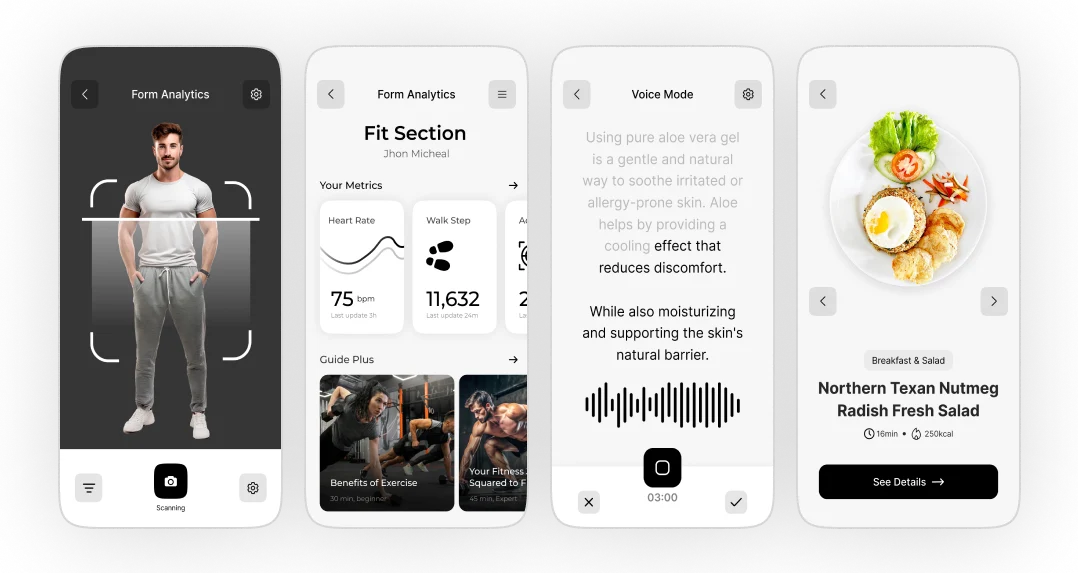
Our Mobile App Development team used React Native to create the mobile app, and Node.js and Python were used for developing backend services and incorporating AI features. Such AI features like natural language processing, sentiment analysis, and AI-driven message replies helped the platform better understand the input from users and provide appropriate coaching suggestions. Goal setting, habit reminders, wellness monitoring, and corporate analytics were incorporated into the system to help in both personal development and corporate health programs. AI Coaching Employees could freely communicate about any issue by using chat or voice and get practical advice regarding their problems. With the help of the artificial intelligence conversation, users could discuss their career, stress-related problems, decision-making, and any other goals that they may have. Contextual Response Based on Emotional Intuition The sentiment analysis, as well as the natural language processing technologies, helped to determine the emotional state of the user. The AI coach was able to adjust its replies according to the current conversation context. Goal Setting and Monitoring Goals can be set, progress monitored, routines established, and notifications sent. This platform ensures that the user is accountable and can track their progress. Analytics for Corporate Wellness Program Dashboards have been developed that can assist corporate administrators in reviewing employee participation, coaching, progress indicators, and general wellness trends. Insights from this data will ensure effective planning of learning and wellness activities within the workplace. Mobile Architecture Design This solution is based on a cross-platform mobile application framework and a scalable backend design. Secure development techniques are used to protect employee information while allowing the client to serve multiple corporate clients. Key Benefits
- Offer round-the-clock AI coaching assistance to employees.
- Ensure that individualized coaching becomes easily available for all.
- Promote healthy behaviors and consistent accomplishment of goals.
- Assist employees in handling stress in the workplace and other daily challenges.
- Avoid dependency on conventional coaching sessions on a one-on-one basis.
- Enhance employee engagement by offering an interactive coaching experience.
- Gain improved insights about the trends in employee engagement and wellness.
Key Features
Technology
| Mobile App Framework | React Native |
| Backend | Node.js |
| AI Integration | Python |
| AI & Natural Language Processing | OpenAI API, TensorFlow |
| Database | MongoDB, PostgreSQL |
| Cloud Infrastructure | Amazon Web Services (AWS) |
| Project Management | Jira, Slack |
Business Results
45%
Increase in Employee Engagement
Personalized coaching, interactive conversations, and regular motivation encouraged more employees to actively use the platform.
30%
Improvement in Productivity
Goal-setting tools, habit tracking, and practical AI-generated guidance helped employees organize their priorities and work toward personal and professional objectives.
50%
Reduction in Coaching Costs
On-demand AI coaching reduced reliance on traditional coaching sessions, making employee guidance more accessible at a lower reported cost.
40%
Improvement in Goal Achievement
Personalized recommendations, reminders, and progress tracking helped employees remain focused and consistent with their goals.
Product Gallery
Planning a Similar Mobile Application Project?
Whether you’re building from scratch, modernizing an existing application, or expanding your engineering team, our experts are ready to help.
- 450+ Engineers
- 14+ Years
- Flexible Engagement
- US Business-Hour Collaboration
Frequently Asked Questions
An AI-powered life coaching app utilizes artificial intelligence to give users personalized recommendations, aid in goal setting, promote good habits, and assist them in dealing with various personal and professional issues that may come up during the day.
AI coaching can make coaching available to the employee at all times, thus helping them handle work-related stress, organize goals, build habits, and get useful advice without the need for scheduling a coaching session every time.
Sentiment analysis and natural language processing allow the app to understand the emotional state of the user when he/she sends a message and respond adequately.
Yes. The platform has features for employee coaching and corporate analytics to help companies understand engagement and wellness trends. Access to personal information must be controlled using appropriate privacy measures.
The platform was developed with security in mind. A production release of the platform will include appropriate encryption, access controls, data retention policies, and guidelines about using data from employee conversations.
It depends on the number of AI integrations, mobile features, personalization needs, analytics, security controls, and cloud infrastructure. Discovery can help determine the scope and get a more precise estimate.