
Project Overview
This project aimed at creating the Dental Patient Portal & Telehealth Platform for the use of a group of dental clinics in Ontario, Canada. The purpose of developing the system was to simplify access to dental care by creating a single online platform that would include such functions as appointment scheduling, telehealth consultations, managing patient files and clinic management. Earlier, the clinics had been using such methods as phone calls, manual appointment confirmation, Excel tables, as well as separate software for virtual consultations. Such an approach complicated the process of appointment management for reception teams and made it hard for patients to schedule appointments and get access to the services. We have created a patient-friendly portal with online booking of appointments, secure virtual consultation, patient dashboards, automatic reminders, and AI-assistance. In addition, the platform helps in managing the dental appointments of patients and allows clinic teams to keep track of the appointments in various clinics. Accessibility, patient file protection, and search-friendly healthcare content were considered as the key aspects of the system development.
Project Objectives
- Organize appointments at different clinics through one interface.
- Make booking easy and ensure that there are no incomplete bookings.
- Enable virtual dental consultation services.
- Provide access to treatment history, bills, prescriptions, and appointments.
- Automate reminders and provide help through AI.
- Make sure the platform is user-friendly for elderly and visually impaired people.
- Organize the schedules of individual dentists as well as different clinics.
- Boost your online presence through SEO-optimized dental services pages.
Let's Shape Your Project Together
Have an idea, a challenge, or a new project in mind? Our team is here to help.
Business Challenges
1. Hard to Schedule Appointments
Appointments were scheduled through calls, filling out the form, and manual confirmations. Receptionists also used spreadsheets for keeping track of follow-up visits, so it was hard to create an accurate appointment schedule for many offices. Centralized booking system was required to simplify this task for both patients and clinic staff.
2. Different Tools for Virtual Consultation and Access to Medical History
Virtual consultations were done using the third-party software not linked to the medical history of the patient at all. So, it became problematic for the clinics to keep track of consult information, history of treatments, and appointments for the future. It was necessary to have integrated platforms to guarantee smooth user experience.
3. User-Friendliness
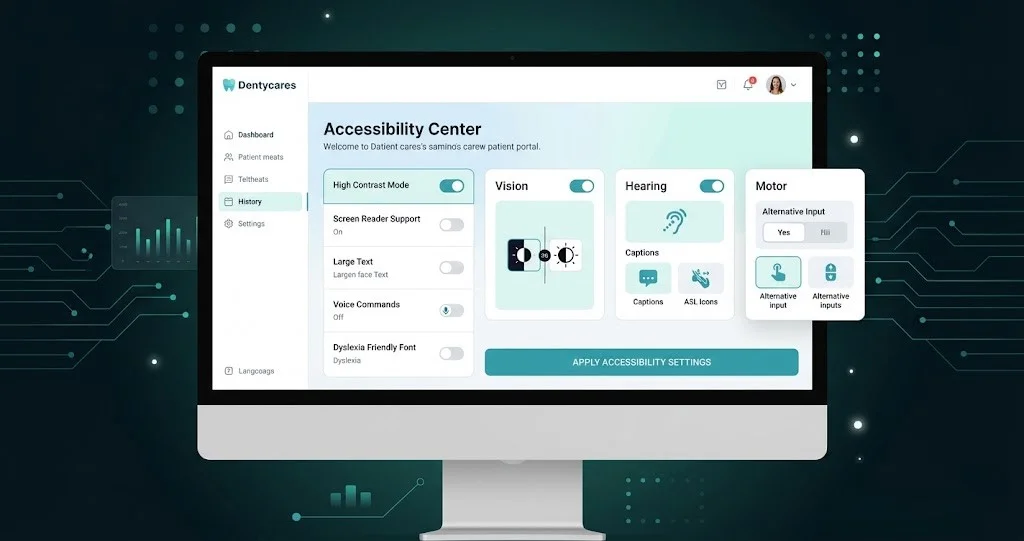
It was important that people of any age and any level of skills can use website of any kind in order to find information about appointments and booking them easily. The lack of readable text, bad contrast between texts and images and poor support for keyboard were problems.
4. Complex Requirements of Dentistry
Each of the many dental procedures requires different appointment time frame, doctor availability, follow up, emergency.
5. High Administrative Workload
Reception staffs used much of their time answering frequently asked questions regarding treatments, insurance, appointment availability, and preparation instructions. Constant calls and manual follow-ups meant there was little time left for other patient concerns. It was time to automate and have the help of AI.
6. Managing Multiple Clinic Sites
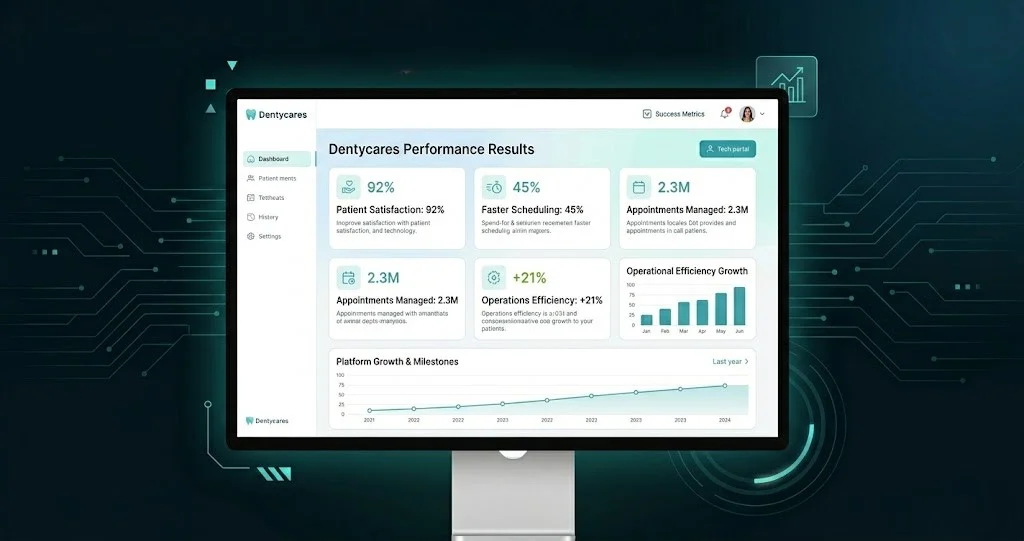
Each clinic had to manage its own dentists, services, and appointment availability, while being able to monitor operations from a single central location. It was impossible to compare appointment availability and track scheduling activity without a single dashboard.
Our Solutions
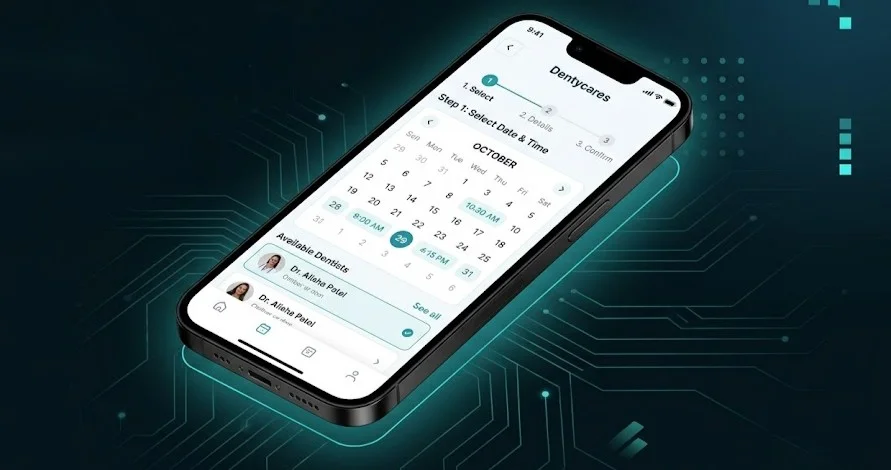
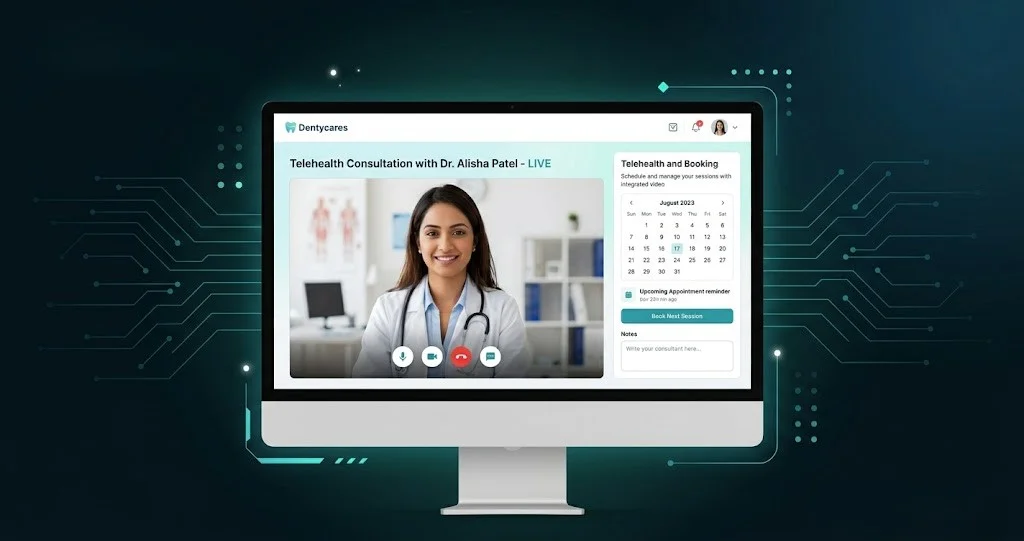
As a trusted Healthcare & Dentist Website Development Company, we wanted to create a dental website that would fit the requirements of the healthcare industry in Canada. Our primary objective was to make dental services easier for patients and reduce the burden of routine tasks from the clinic’s staff. We provided our customers with a convenient booking process, secure virtual consultations, patient dashboards, notifications, and even AI assistants. Patients can find the appropriate dental service, select a clinic or a dentist, and schedule an appointment without having to rely solely on phone calls. Simplify Online Dental Appointment Booking We created a convenient three-step booking process. Patients can choose the dental service, the clinic or the dentist they prefer, and book an appointment online. The system allows for various appointment times, dentist availability, emergency bookings, and even follow-ups. Facilitate Safe Virtual Dental Consultations We have included telehealth features that allow patients to participate in eligible virtual consultations using secure consultation links. Automated reminders ensure that patients are prepared for their sessions and stay on top of upcoming appointments. Integration of consultations with appointment management and patient information will also facilitate a more organized digital care process for clinics. Keep Patient Records in One Place We have designed a patient portal where patients can view their appointment history, treatment details, invoices, prescriptions, and future appointments. Our user interface is designed to be highly accessible to all patients with readable text, high contrast elements, and keyboard navigation. Minimize Administrative Tasks with AI and Automation We have included an AI assistant to answer common questions related to dental treatments, insurance, and appointment preparation. The assistant can direct patients to the appropriate services and booking options and forward difficult questions to the clinic staff. Automated SMS and email reminders will help patients remember their appointments and follow-ups. Additionally, voice navigation will be available for patients who require it. Enhancing Multi-Location Management and Reporting Centralized management tools for scheduling, along with administrative dashboards, were implemented to schedule dentists, clinic availability, and appointments. These will enable the clinic teams to have a better idea of their schedule and allow administrative coordination of the appointments. Key Benefits
- Schedule dental appointments at various clinic sites.
- Make appointment scheduling process online convenient.
- Enable virtual consultation via telehealth integration.
- Enable easy access of dental records and bills for patients.
- Minimize no-shows with automated reminders.
- Cut down on repetitive tasks using AI.
- Facilitate easy access for elderly and visually impaired people.
- Make dentist scheduling and clinic management easy.
- Track appointment availability at various locations.
- Make dental service search easy with SEO-optimized website pages.
- Make way for future scalability for dental practices.
Key Features
Technology
| Frontend Framework | Next.js |
| Backend Technologies | Node.js, Django |
| Telehealth and Video | WebRTC |
| AI and Natural Language Processing | OpenAI API, TensorFlow |
| Patient Records Database | PostgreSQL |
| Sessions and Reminders | Redis |
| Payment Gateway | Stripe |
| Notifications | Twilio (SMS and Email) |
| Cloud Infrastructure | Amazon Web Services (AWS) |
| Security | OAuth 2.0, Role-Based Access Control (RBAC), Encryption |
| Accessibility | High-Contrast UI, Keyboard Navigation, Screen-Reader Support |
| Project Management | Jira, Slack |
| Architecture | Centralized Multi-Location Healthcare Platform |
Business Results
41%
Reduction in Phone-Based Appointment Scheduling
Online booking reduced the need for patients to call the clinics to schedule visits. This helped reception teams spend less time handling routine appointment requests.
33%
Reduction in Missed Appointments
Automated reminders helped patients remember their upcoming visits, contributing to fewer missed appointments and better schedule management.
52%
of New Patients Booked Online
Online booking became an important channel for new patient appointments, with 52% of new patients using the digital booking process.
27%
Growth in Cosmetic Dental Teleconsultations
Virtual consultation options made it easier for patients to begin their cosmetic dental treatment journey remotely, contributing to increased use of teleconsultation services.
90%
Increase in Dental Service Page Engagement
Average engagement time on dental service pages increased by 1.9 times, representing a 90% increase. Clearer navigation and more useful content helped patients explore treatment information for longer.
Product Gallery
Planning a Similar Mobile Application Project?
Whether you’re building from scratch, modernizing an existing application, or expanding your engineering team, our experts are ready to help.
- 450+ Engineers
- 14+ Years
- Flexible Engagement
- US Business-Hour Collaboration
Frequently Asked Questions
Dental patient portal and telehealth platform is an online healthcare solution that lets patients make appointments, access dental information, receive notifications, and have eligible consultations virtually using one tool.
Yes. The solution provides a three-step booking process allowing patients to choose a dental service, select a clinic or a dentist, and confirm an appointment online.
Yes. The platform leverages WebRTC-based telehealth technology to provide virtual consultations via secure links. Whether a consultation can be held remotely or not is determined by the patient’s needs and the services provided by the clinic.
The portal enables patients to access appointments, medical records, invoices, prescriptions, and other information regarding their dental care easily without contacting the clinic.
An AI-powered assistant can answer common questions related to dental procedures, insurance, and appointment preparation. Besides, it can help patients find appropriate services and book an appointment.