Get Free Trial Week Developer Access, Try Before You Hire. Click Here to Claim Now

Customer
Our client is the U.S. based startup company of professional tattoo artists and studio managers. They used Instagram, walk-ins, and manual booking by sending DMs and emails before they approached us. Service Price sharing was irregular, and the confirmation of booking was done manually.
They also had a local customer base that was loyal, but they did not have a centralized digital system. Since online discovery became the most important channel to select tattoos in the U.S., the old workflows were causing a scalability constraint.
They resolved to develop a tattoo mobile app that has a contemporary functionality that is in line with the contemporary user expectations. They were new to this tech world, and they wanted to understand various questions, such as:
- Is this tattoo application profitable in 2026 & later?
- Which will be the best review model from commission, subscription, and hybrid systems?
- What is the potential of AR preview to affect booking?
- What are the significant technical threats in real-time tattoo drawing?
- What is the price of creating a tattoo application?
- How much time does it take to be launched at scale?
They were aiming to provide a highly organized tattoo service app where the customer would be able to find the artist, preview the design with accuracy, make a booking, and have confidence in the process. The client needed the sophisticated filtering, quality graphics, and non-problematic cross-platform functionality since the target audience was in the U.S.
To get started with this project, the client contracted our services of dedicated developers to implement the project on the basis of a signed NDA to guarantee the implementation of what is seen as a structured collaboration, data secrecy, and long-term technical assistance during the development process.
A Challenge to Design & Development Tattoo Services App for the U.S. Market
The development of this custom Tattoo App Design & Development Services proved to be problematic in the technical and operational spheres.
- No Existing Digital Framework: The client did not have a booking engine, artist management system, or digital workflow. All this had to be designed in-house.
- AR Placement Accuracy: The tattoo designs had to be physically correct concerning the body contours, regardless of lighting conditions. There would be less trust with distortion or unrealistic overlays.
- High-Resolution Portfolio Optimization: Artists placed uncommon image formats and sizes, making it necessary to optimize and compress them using automated pipelines.
- Complex Booking Logic: The duration of tattoo sessions is between 1 and 8 hours. The time-table system was required to control the deposits, partial payments, availability blocks, as well as cancellation rules.
- Payment and Fraud Prevention: Booking with high value should have been secured, and the deposit verified.
- Scalability & Performance: AR rendering, image streaming, and live booking updates needed to have a backend that would not be constrained by user growth.
- User Trust and Transparency: The users had to know more about the artist ratings, the profiles that were verified, and the reviews that were left by the real clients to feel safe making the bookings.
Best AR-Enabled Tattoo App Solution Implemented By Our Team
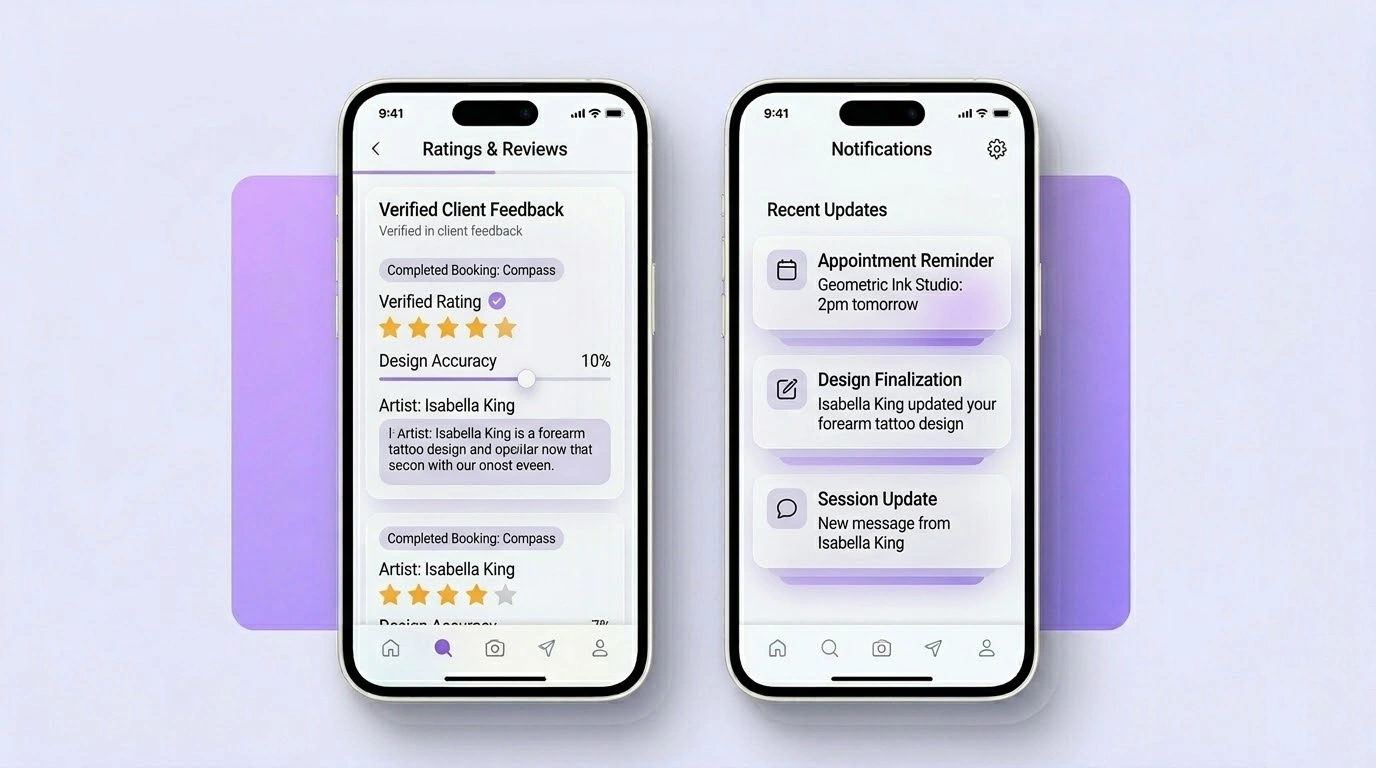
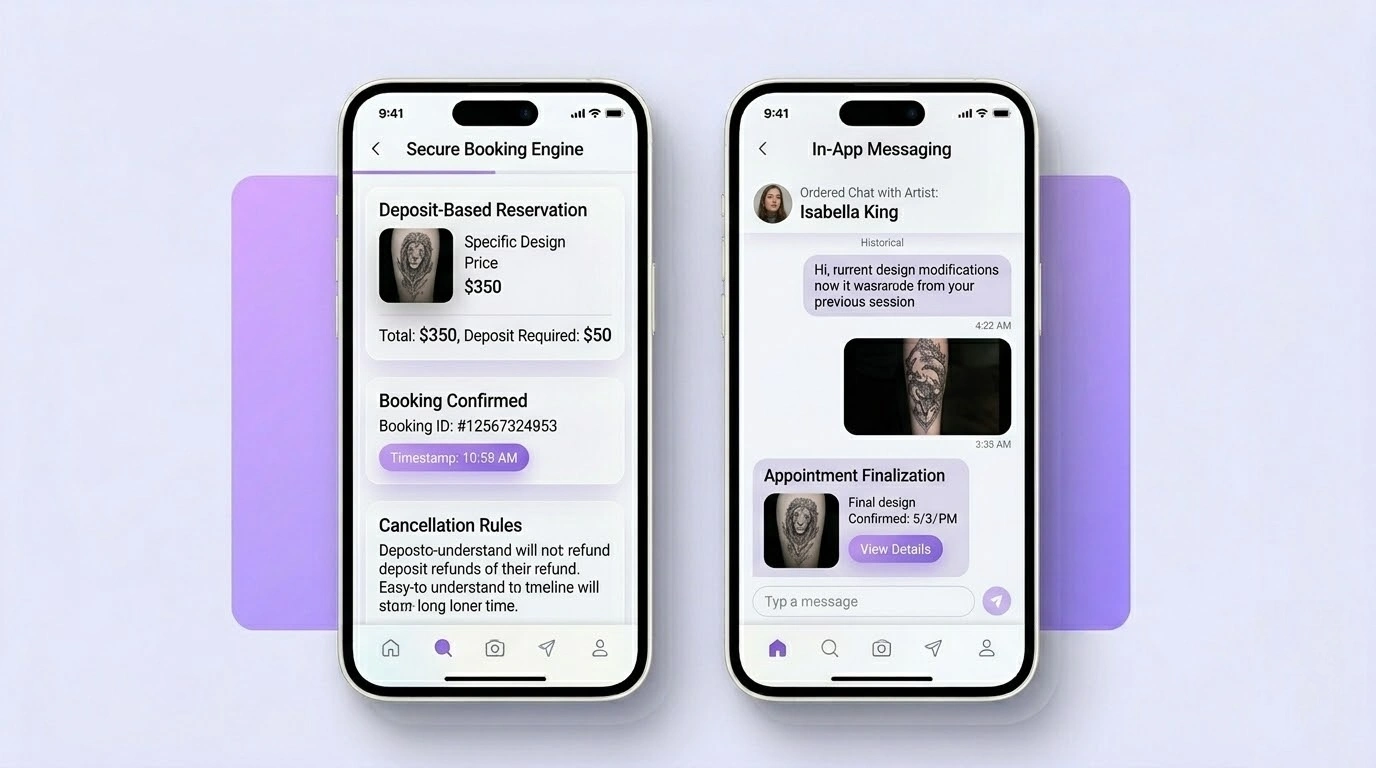
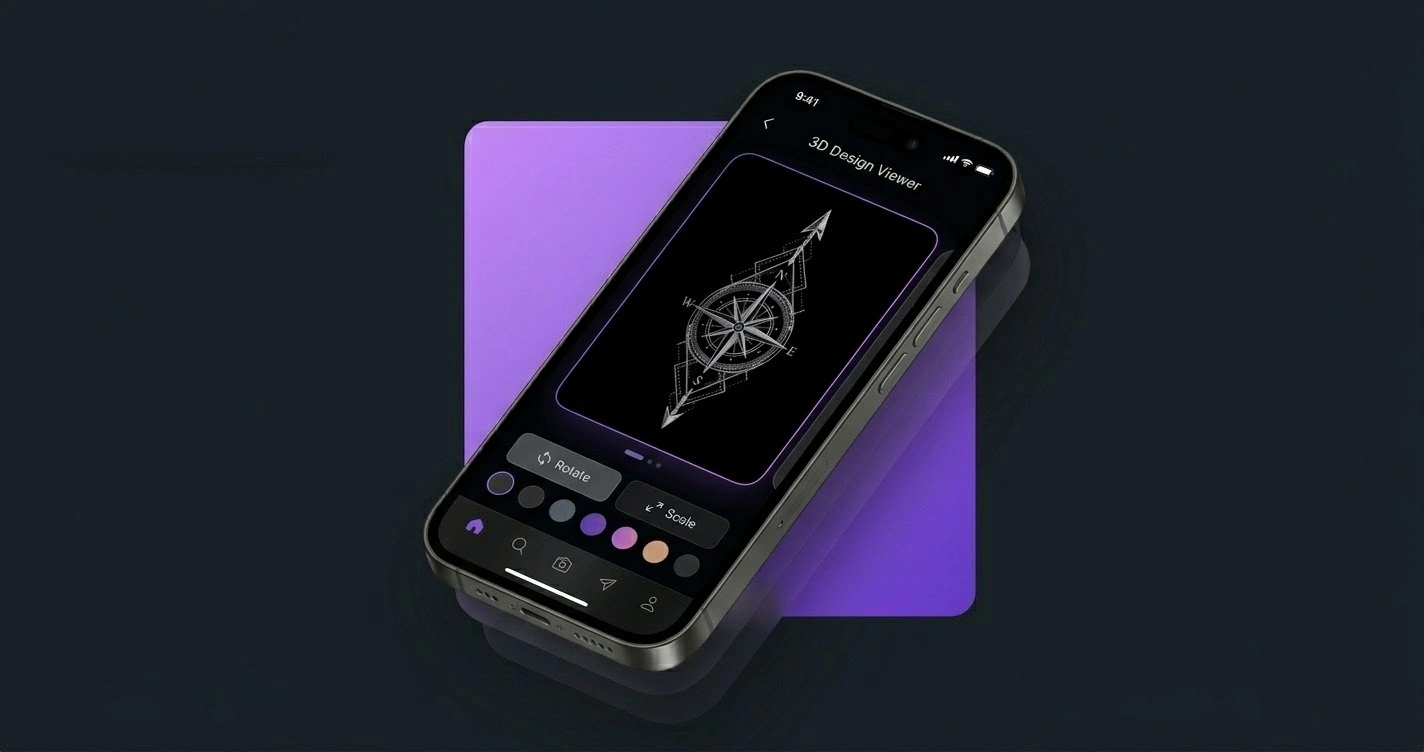
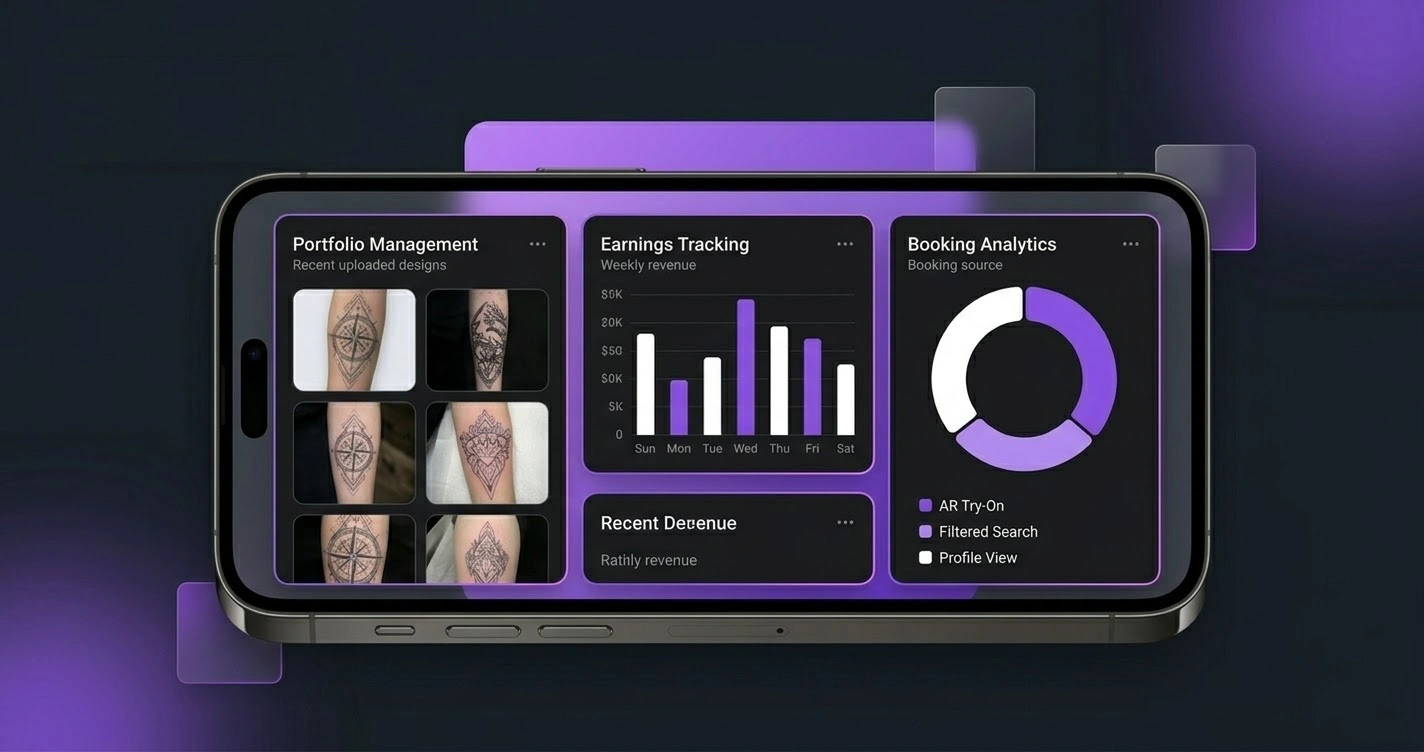
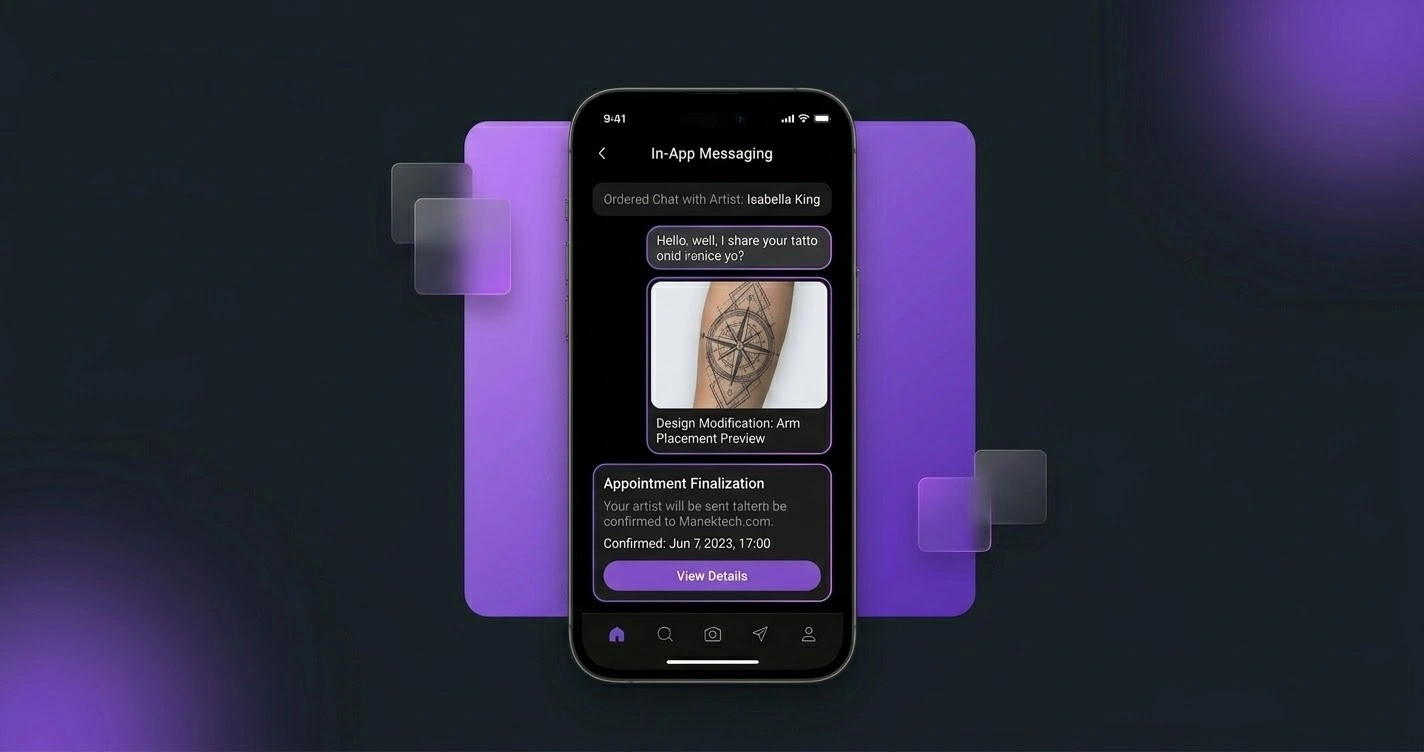
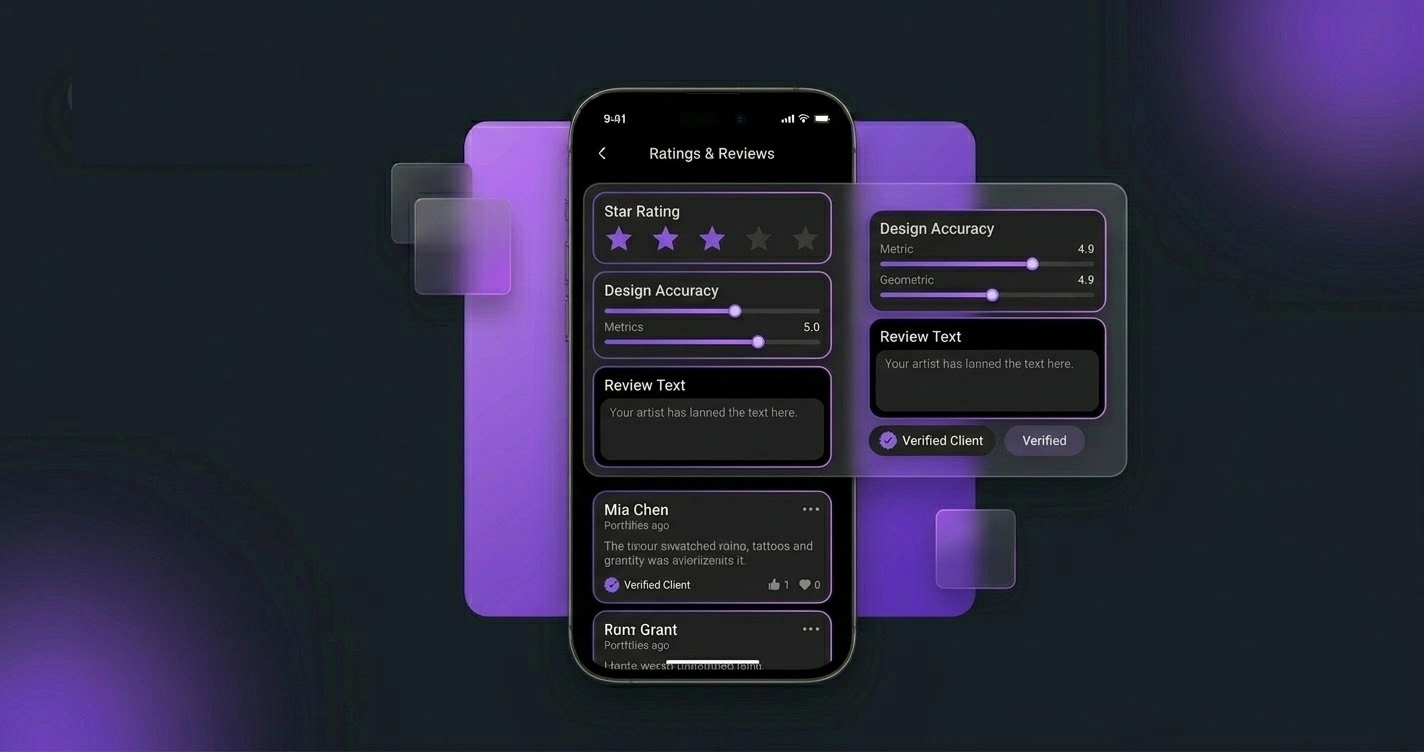
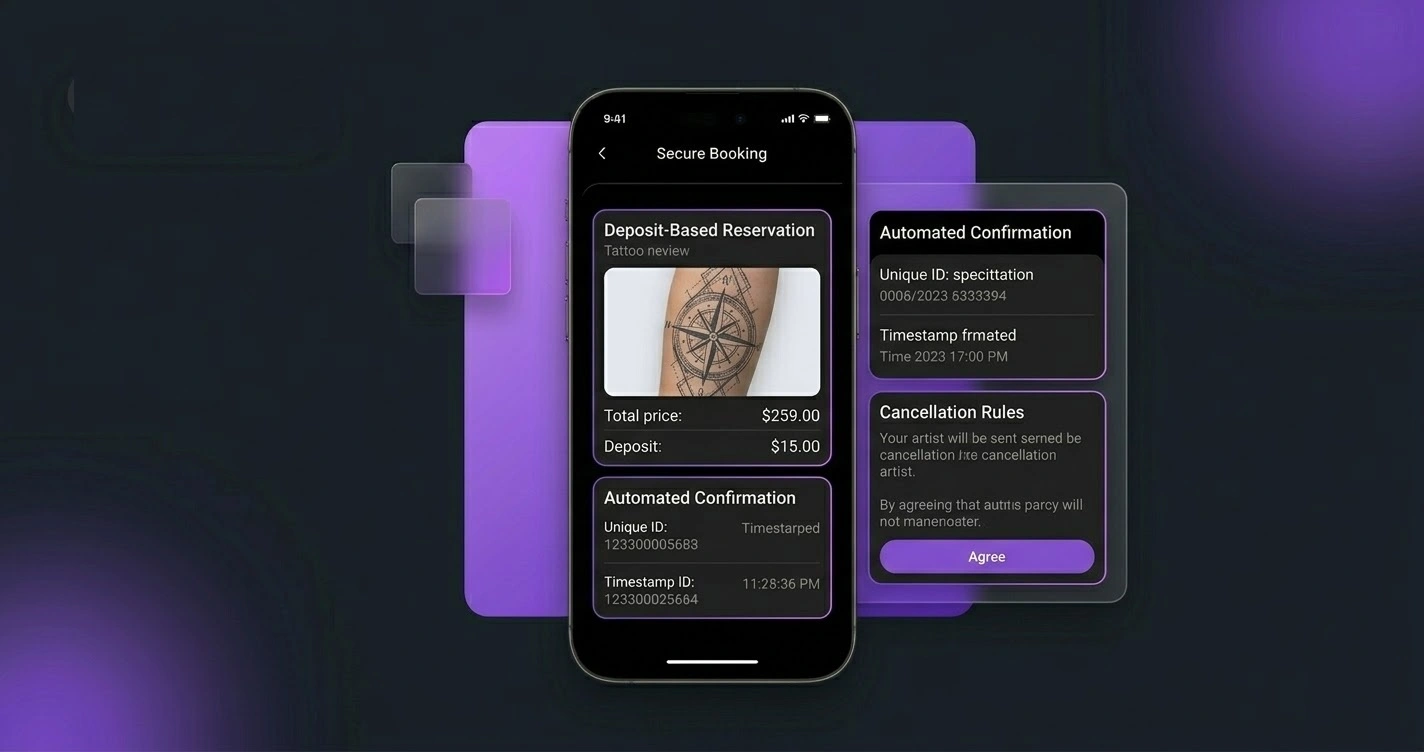
In response to this, we have created a scaled tattoo app ecosystem that is optimized to serve behavior in the U.S. market.
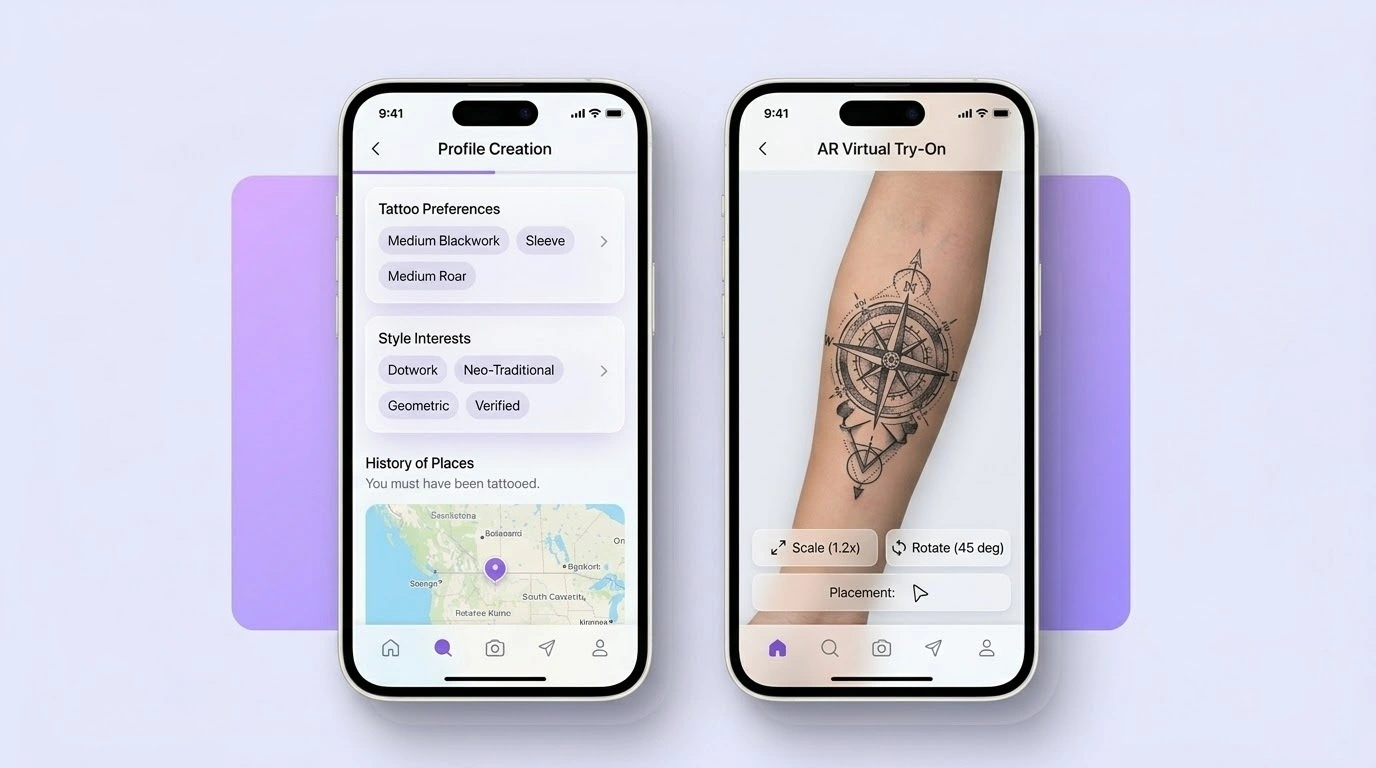
We used AR virtual try-on technology, which enabled users to place designs on the arms, back, legs, and shoulders in real time. Before making a booking, users were able to manipulate the size, rotation, and position, which offered much less uncertainty during the decision-making process.
The UI incorporated micro-interactions and kinetic transitions to showcase ink textures and design layers. Minor hues of movement led users in navigating without being bombarded. Bold typography used in the creation of narrative scrolls turned dull gallery rooms into design trips.
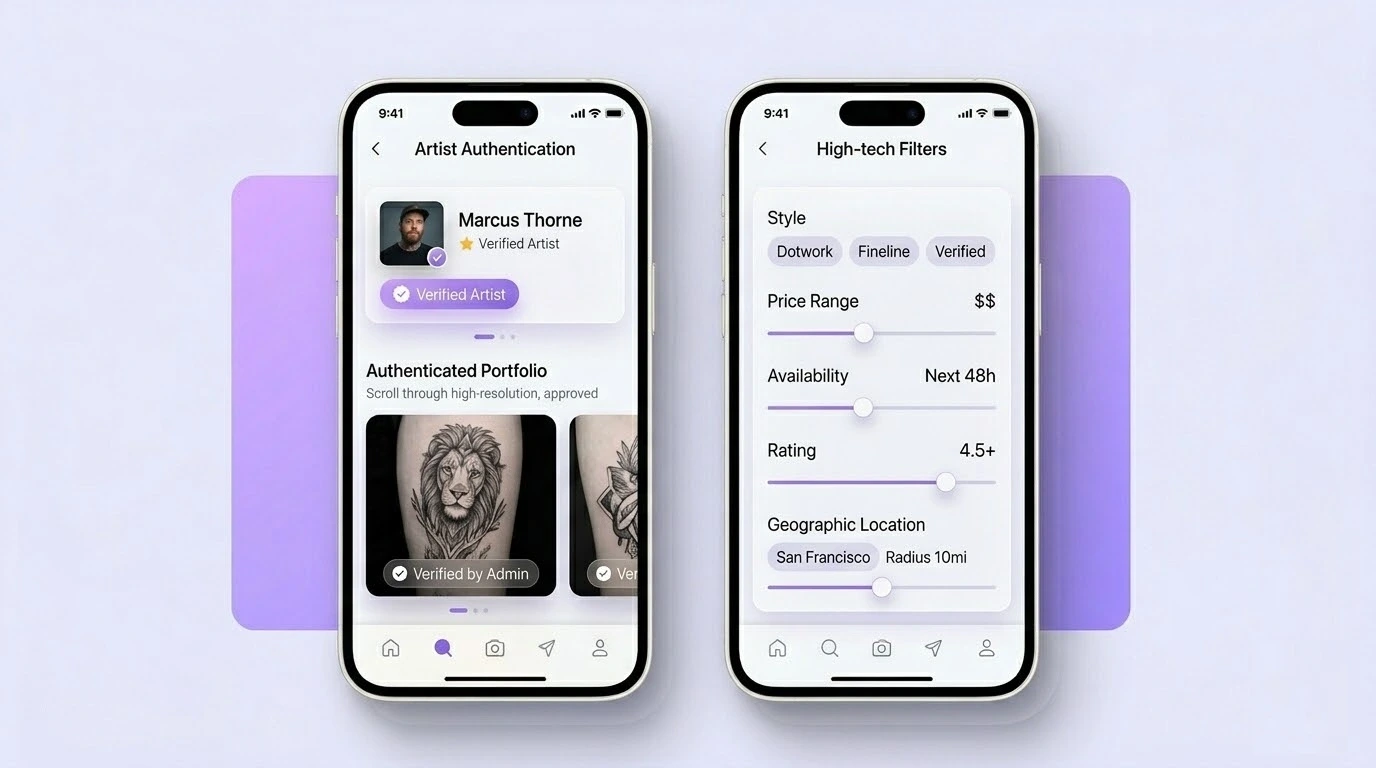
We introduced advanced filtering, based on styles, price, rating, proximity radius, and availability. This minimized the expected time of design searches and enhanced artist discovery.
There was a Booker engine that accepted deposit-based bookings, automated confirmations, reminders, and calendar-based availability management. Safe and transparent transactions were guaranteed by the use of secure Stripe integration.
The final solution comprised the integration of artist discovery, virtual preview, and booking and payment in a single controlled ecosystem.
Result of Tattoo App Design & Development with AR Try-On & Kinetic UI
The platform provided quantifiable positive business outcomes within 6 months of its launch:
- The conversion rate of confirmed bookings doubled with the introduction of AR preview.
- The pre-booking consultation messages dropped by 58%.
- AR preview was used by 46% of users to make final appointments.
- Active user 35% repeat booking rate.
- An average session time has increased by 2.4 times because of immersive portfolio browsing.
The client switched to the management of bookings manually to a set of digital structures of revenue, where they could be expected to grow monthly.
Key Features
- Profile Creation: There is an option of creating a detailed profile with tattoo preferences, style interests, and a history of places.
- AR Virtual Try-On: Real-time design placement simulation: scales and rotations.
- Artist Authentication: Authenticated artist as well as uploaded an authenticated portfolio.
- High-tech Filters: Filters by style, price range, availability, rating, and geographic location.
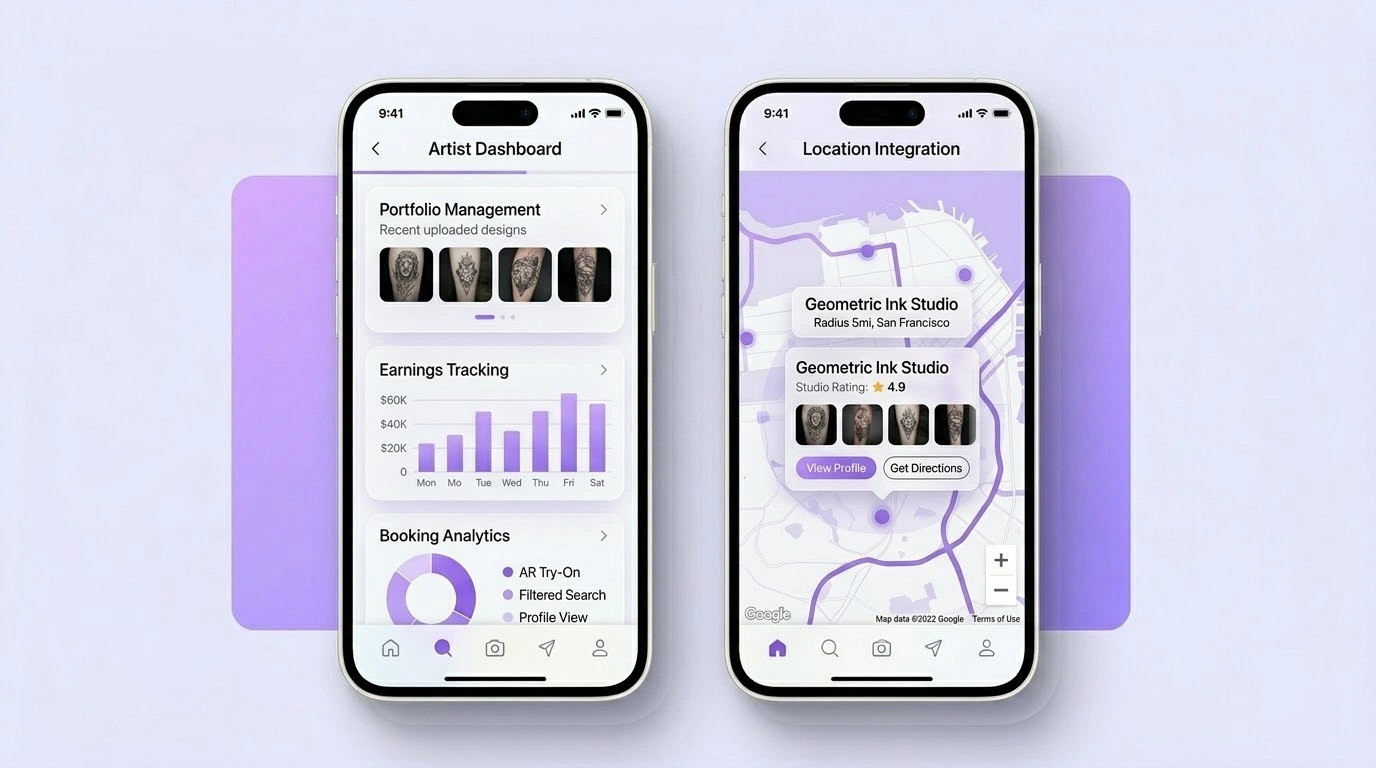
- Artist Dashboard: Portfolio management, earnings tracking, and booking analytics.
- Secure Booking Engine: It is a deposit-based reservations engine that employs automated confirmations and cancellations logic.
- Location Integration: Find artists in the geographic radius of your choice with integrated mapping services.
- In-App Messaging: Ordered chat to discuss the design with finalization of the appointment.
- Ratings & Reviews: That is verified client feedback attached to the completed bookings only.
- Notifications: Automated reminders for appointments and session updates.
Tools and Technologies We Used
- Mobile App Framework: React Native
- Native Modules: Swift (iOS AR), Kotlin (Android AR)
- AR & 3D Rendering: ARKit, ARCore
- Backend: Node.js, Django
- AI & Image Processing: TensorFlow (skin-tone adaptation & overlay alignment)
- Database: MongoDB, PostgreSQL
- Payments: Stripe
- Messaging/Notifications: Twilio
- Maps & Location: Google Maps Platform
- Cloud Infrastructure: Amazon Web Services
- Project Management: Jira, Slack
Do You Want to Build a Tattoo App Like This?
Our Tattoo App Design & Development Services will assist you in defining, designing, and implementing a scalable tattoo discovery and booking application with AR implementation and organized revenue models.
Share it on:
Suggested Case study
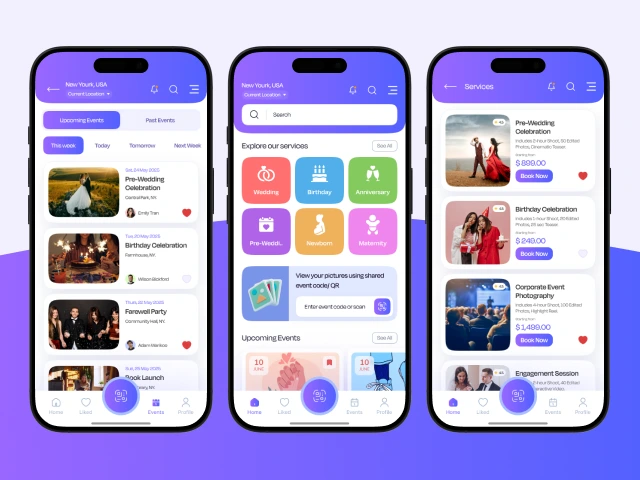
Photographer Booking App Development
The customer wanted to find and book photographers within their budget for various events. We built a photographer booking app for customers and photographers. This app allows users to browse photographer profiles, compare reviews, chat, book services, and make secure payments. For both Android and iOS, the app has intuitive navigation, real-time availability, and an integrated gallery to view final photos.
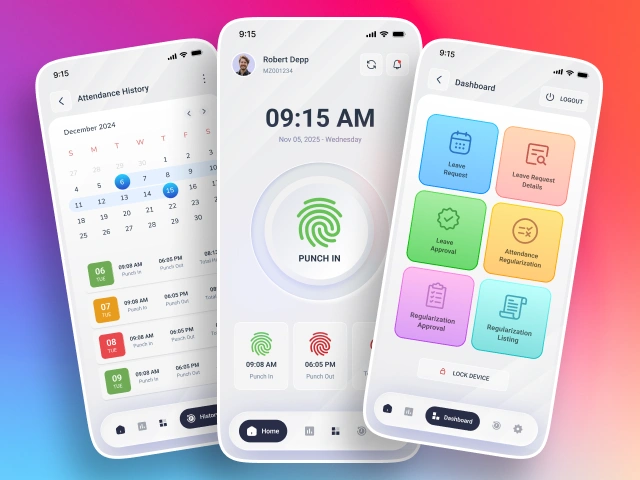
AI-Powered Attendance Tracker App Development
Today, attendance tracking has become essential for every company, especially those who work hybrid, remote, and field teams. We developed an AI-powered attendance tracker app for our USA client to help them with record check-ins using face recognition, QR codes, and GPS tagging. We built this automated attendance tracking app with Flutter, on-device AI, offline support, and easy HR/payroll integration. Now, managers can manage in-house and remote employees' attendance from a single app, and it has also improved HR and payroll problems by reducing manual correction work and giving real-time visibility.