
Project Overview
The On-Demand House Cleaning Service App is a mobile application that we have developed for a Dubai-based startup that wants to provide modernized house cleaning service bookings to its clients. Using the app, one can browse different cleaning services, schedule appointments, view information about cleaners, and handle bookings from their mobile devices.
Earlier, the company was using phone calls and WhatsApp messaging to handle their bookings. But as the company grew, they found it increasingly difficult to handle the booking requests and assign cleaners manually. Hence, to solve their problems, we have developed a feature-rich cleaning service app having different modules for customers and cleaners, a dashboard for the company, an automatic scheduling system, payment handling capabilities, and other features.
The app has been built using Flutter & Node.js and is available for Android and iOS users. It not only helps the business manage its bookings and communication but also prepares it for expanding its business in nearby areas. The company uses both English and Arabic languages in the app and also has verified cleaner profiles and ratings.
Project Objectives
- Digitize booking of house cleaning services and get rid of long phone calls and WhatsApp chats.
- Make the process of service selection and appointment scheduling easy.
- Automatically assign cleaners according to their availability, location, and time of choice.
- Increase transparency by adding cleaner profiles and ratings and charging in advance.
- Send out notifications about changes in bookings and arrival of the cleaner.
- Facilitate online payment facilities and automatic invoicing.
- Offer both English and Arabic language options.
Let's Shape Your Project Together
Have an idea, a challenge, or a new project in mind? Our team is here to help.
Business Challenges
1. Manually Booked and Scheduled
Initially, the client was booking cleaning appointments using phone calls and WhatsApp messaging. With more customer requests coming in, it started taking much effort to schedule appointments, find out when customers are available, and coordinate the scheduling. Thus, a booking system was required in order to simplify this process and avoid any possible misunderstandings.
2. Complicated Cleaner Assignments
Manually assigning cleaners proved to be complicated, especially in case of peak hours. It was necessary for the business to have a smarter solution in order to assign a cleaner based on the customer request.
3. Not Transparent Bookings
Customers needed detailed information regarding cleaning services, prices, cleaners who were going to do the job, and the time of their arrivals. With such information being provided mainly by means of calls and messages, customers found it not transparent enough.
4. Misunderstandings between the Customer and the Cleaner
Manually arranging the time of arrival and providing the customer with instructions caused many misunderstandings. It was important for the platform to provide customers and cleaners with a more convenient way of communicating.
5. Language Barriers
Being multicultural, Dubai hosts customers who speak not only Arabic but also English. Therefore, having an app developed in one language might restrict accessibility and reduce convenience for the customers. The client required a multilingual application which would serve a wider customer base.
6. Scaling the Business during High Demand Periods
Being a fast-growing company, the client aimed to be able to take care of more bookings without proportionally increasing the amount of administrative work done. It made sense to develop a scalable mobile platform with automated workflows and online payments.
Our Solutions
As a premier Mobile application development company Dubai, ManekTech engineered a modern, feature-rich home services ecosystem to replace manual phone calls and WhatsApp scheduling. We developed dual-interface mobile applications for both customers and service personnel, backed by an administrative control hub to manage bookings, automated assignments, and localized UAE payments seamlessly.
As a specialized iPhone app development company and cross-platform mobile engineering team, we utilized Flutter and Node.js to build a seamless booking experience optimized for both iOS and Android users across the UAE.
Furthermore, when organizations seek to hire Android app developers in UAE, ManekTech provides dedicated regional talent capable of tailoring intuitive user interfaces, Arabic localization, and regional gateway integrations.
Smart Booking & Automated Cleaner Assignment
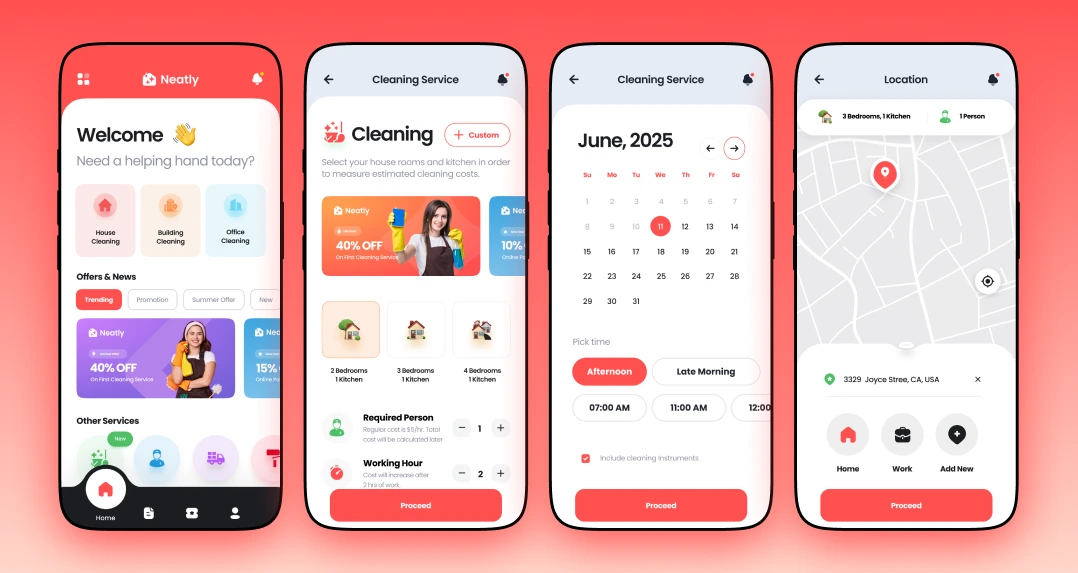
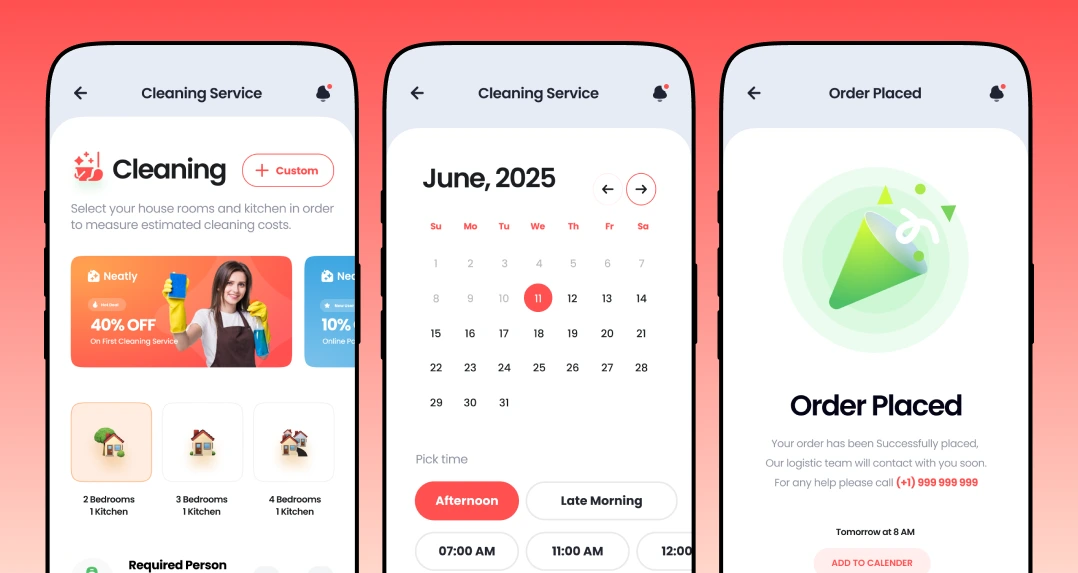
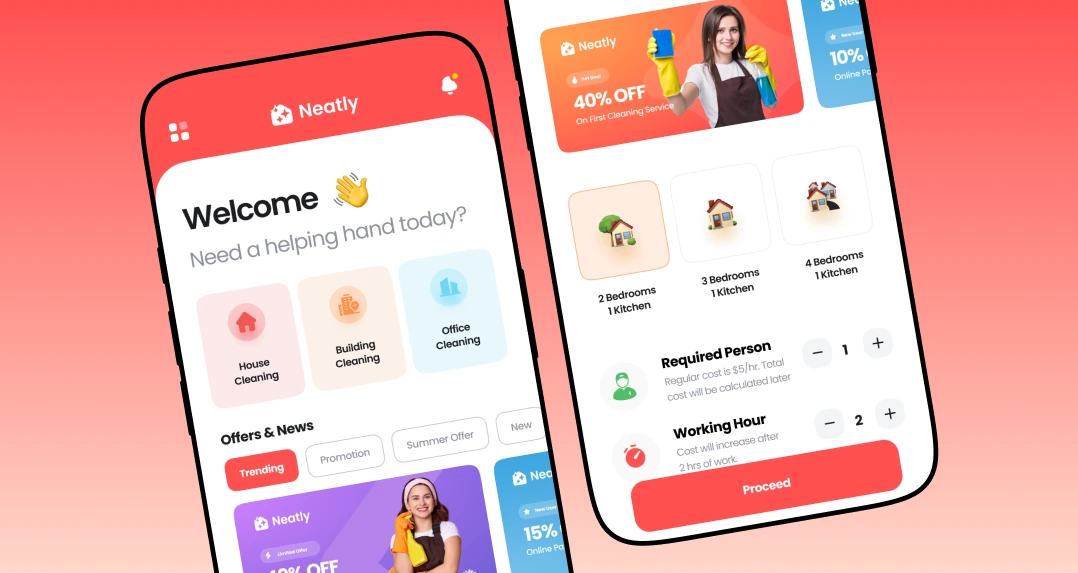
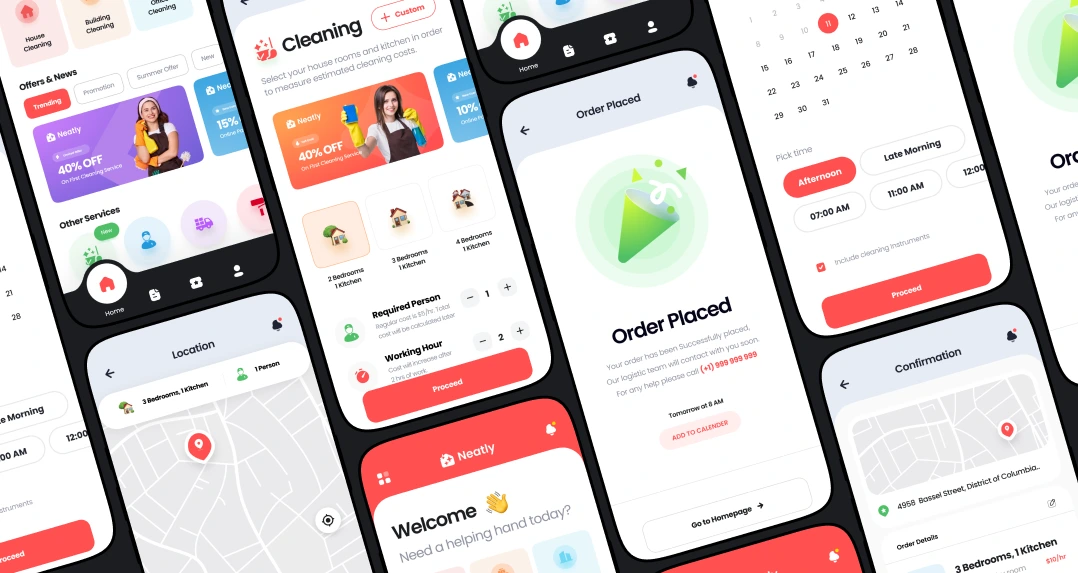
The solution has an intuitive booking process allowing customers to choose the preferred cleaning service, its date, and time. The software automatically matches the request with the available cleaner based on the appropriate schedule and location data of cleaners.
Real-Time Updates & Trusted Cleaner Profiles
Customers have access to cleaner profiles, including ratings and verification status, allowing them to make more thoughtful booking decisions. Real-time notifications and updates help to stay in touch with the booking and cleaner’s arrival.
Seamless Payments & Streamlined Management
Online payment features have been added to the website to streamline the transaction process. The admin dashboard offers the client’s team a centralized platform from where they can manage bookings, track revenues, view feedback from customers, and manually assign cleaners when required.
Key Benefits
-
Make home cleaning appointments easy through a convenient mobile application.
-
Minimize the need for manual coordination between the customer, cleaner, and administrator.
-
Assign the cleaner automatically according to availability and location.
-
Increase visibility of the booking process using cleaner profiles and clear pricing.
-
Provide customers with real-time information and notifications.
-
Offer support for both English and Arabic languages.
-
Facilitate payment and invoice processes through online transactions.
-
Manage booking, income, and feedback all from a single dashboard.
-
Serve Android and iOS customers through cross-platform application development.
Key Features
Customer Registration and Profiles
Let your customers create an account, access your cleaning services, and interact with the app.
Easy Booking of Your Cleaning Services
Let your users book your cleaning services by selecting them and setting up their preferred booking date and time.
Smart Scheduling and Cleaner Assignments
Make sure that your cleaning services are matched with cleaners’ availability and other scheduling details.
Real-Time Cleaner Tracking and Updates
Provide updates on the booking status of your customers and information about cleaner arrivals at the appointed time.
Cleaner Profiles, Information, and Ratings
Offer your cleaners’ profiles and information to increase their credibility with your customers.
In-App Communication and Notifications
Enable in-app communication between your customers and cleaners through chat and notifications.
Multi-Language Interface
Create support for the English and Arabic languages in order to enhance the accessibility of the platform for the population of Dubai.
Online Payment System & Auto-Invoicing
Incorporate Stripe along with a payment gateway from the United Arab Emirates for conducting payments, showing pricing of services, and creating invoices during booking.
Administrator Dashboard
Create an administrator dashboard where users can manage customer bookings, check revenue and reviews, and also assign cleaning tasks manually if needed.
Technology
| Mobile App Development | Flutter |
| Backend Development | Node.js |
| Database | MongoDB |
| Admin Panel | ReactJS |
| Payment Gateway | Stripe, Local UAE Payment Gateway |
| Mobile Platforms | Android, iOS |
| Scheduling & Automation | Automated Cleaner Assignment |
| Communication | In-App Chat, Push Notifications |
| Localization | English, Arabic |
Business Results
60%
Reduction in Manual Work
Automated booking and scheduling workflows reduced the administrative effort involved in coordinating cleaning appointments and managing service requests.
3X
Increase in Bookings and Repeat Customers
The business reported a threefold increase in bookings and repeat customers within the first three months. This represents a 200% increase over the original baseline, assuming the comparison uses the same measurement period and definitions.
40%+
Reduction in Customer Wait Times
Improved scheduling and cleaner coordination helped reduce customer wait times by more than 40%, contributing to a more convenient service experience.
55%
Reduction in Miscommunication and Delays
Delivering booking details and job updates directly through the app helped reduce communication gaps and service delays between customers and cleaners.
Product Gallery
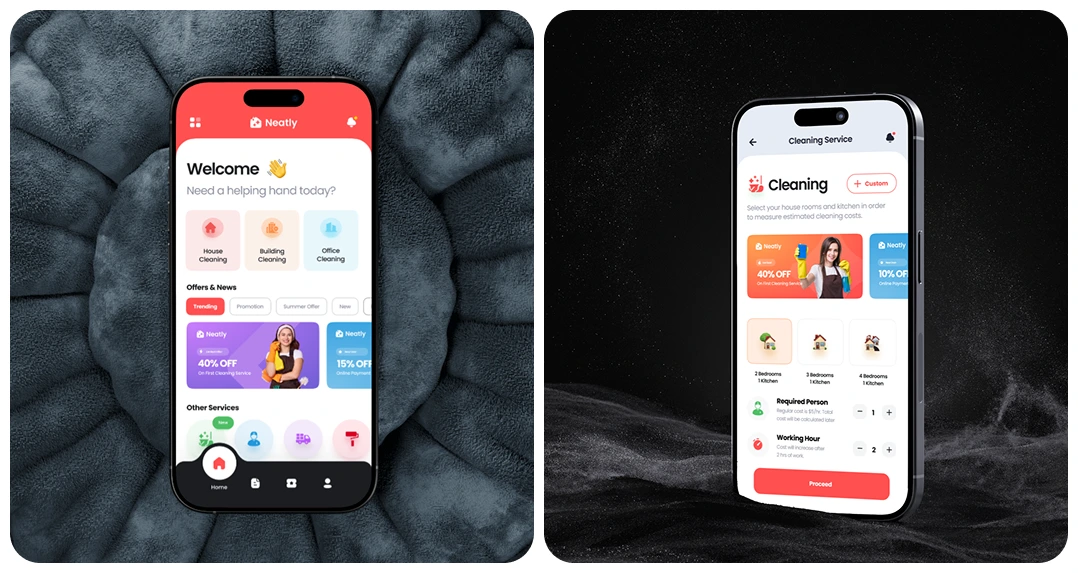
Are you Interested in creating a similar app for a cleaning service?
Our consultants are ready to hear your ideas. Request a free consultation with our software & app experts and transform it into a digital reality.
- 450+ Engineers
- 14+ Years
- Flexible Engagement
- US Business-Hour Collaboration
Frequently Asked Questions
A house cleaning app serves as a connection between clients and cleaning service providers via a mobile app. Clients can browse for services, book cleaning sessions, get cleaner information, updates, and make payments via the app.
The house cleaning app provides customer registration, service booking, scheduling, cleaner allocation, real-time updates, verified cleaner profiles, ratings, communication, multilingual options, payments, invoicing, and an administration dashboard.
Yes, clients can select the desired date and time for the service.
Yes, the application has been created using Flutter, which allows cross-platform mobile development for Android and iOS.
Yes, the application provides Arabic and English languages for the convenience of the clients living in Dubai.
All functions mentioned above, such as booking, cleaner allocation, customer interaction, payments, and administration, are combined in the platform that simplifies managing the increasing number of customers’ requests.