Get Free Trial Week Developer Access, Try Before You Hire. Click Here to Claim Now

Top Trending 100+ Food App Ideas for Restaurant and Food Businesses [Updated 2026]


Introduction:
We are currently living in an era of convenience and innovation, where you have access to information and food at your fingertips. This brings revenue-generating food delivery app ideas into the play to achieve success and growth.
The food delivery business faces significant competition, which puts startups looking to set a mark in deep distress. According to Statista, the food delivery market is expected to reach USD 1.79 trillion by 2028.
To outperform the competition, startups need to develop the best food delivery app ideas to bring their business into the headlines. With more and more food delivery apps entering the market, from online ordering to quick meal delivery, startups need to choose the best that drive revenue and customer retention.
Here, we have covered some impressive profit-making food delivery app ideas to rule the market.
Benefits of Food Delivery App for Your Business
Food delivery apps give businesses a range of benefits, raising the ultimate goal of growth and sales. Let’s step towards considering the top benefits of implementing food delivery apps for your business:
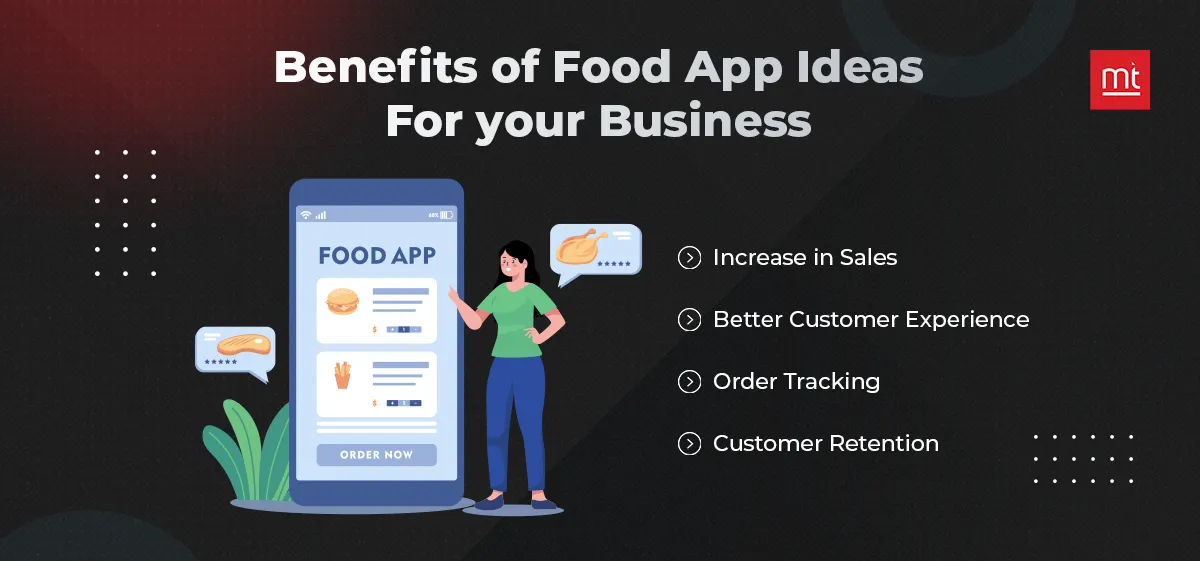
1. Increase in sales
Delivery apps help widen your customer base by reaching a broader audience and, hence, generating more orders, which generate increased revenue.
2. Better customer experience
Facilitating a comfortable and easy-to-use service for ordering food improves customer experience, creating satisfaction and loyalty.
3. Order tracking
The mobile app development process of real-time order tracking allows customers to know the status of their orders in detail. Thus, uncertainties and transparency improve.
4. Customer retention
Loyalty programs and customised offers offered by food delivery applications drive repeat visits, thus improving customer retention and long-term profitability.
Top 10 Food App Ideas for Restaurant and Food Businesses
Startups must always come up with creative yet convenient mobile app ideas that grab the user's attention. A report says that the food delivery market might surpass $165 billion by 2029. To keep up with the wave of growth, startups must tap into the best food delivery business ideas. Here is a list of the 10 best Food app ideas to make a mark in the industry and exceed expectations.
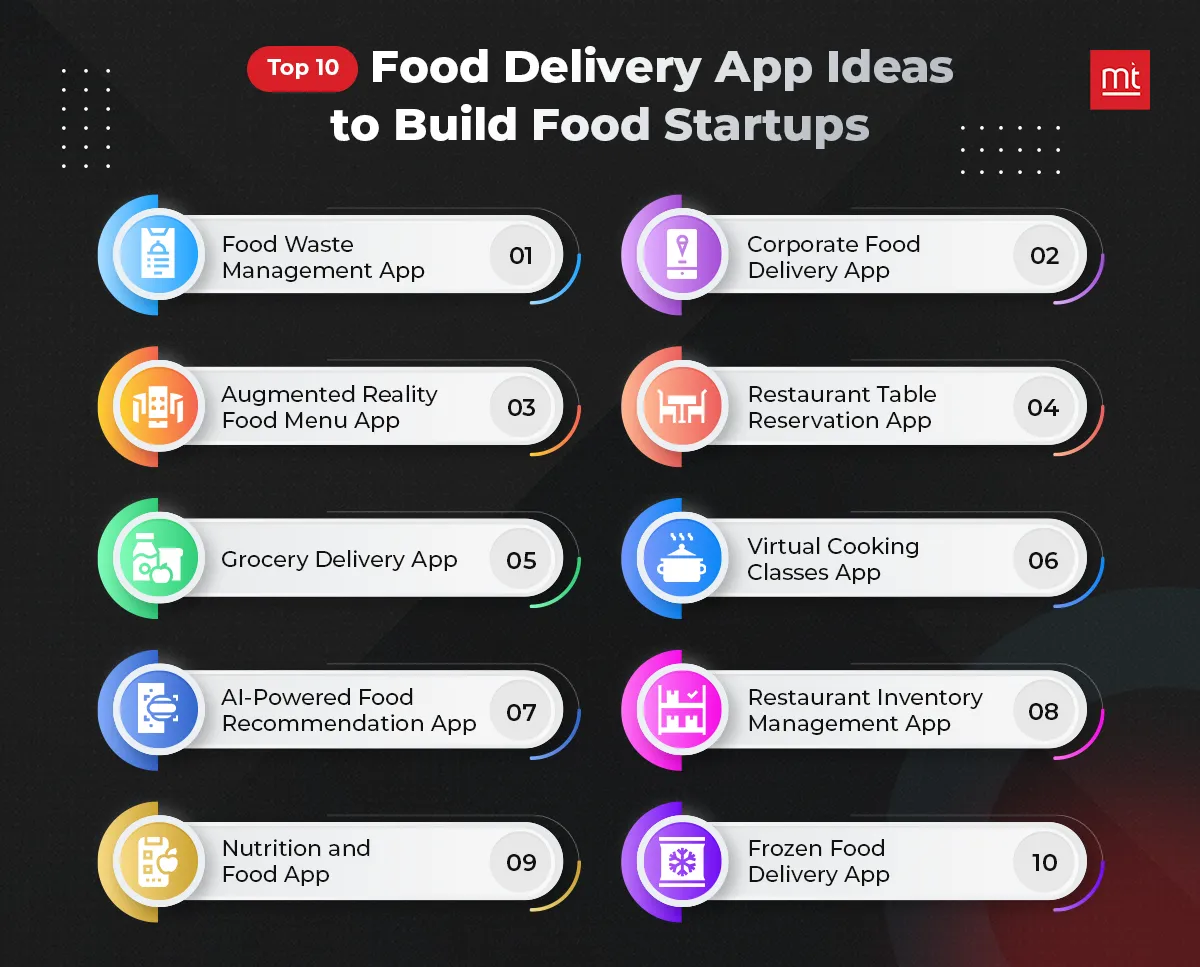
#1. Food Waste Management App
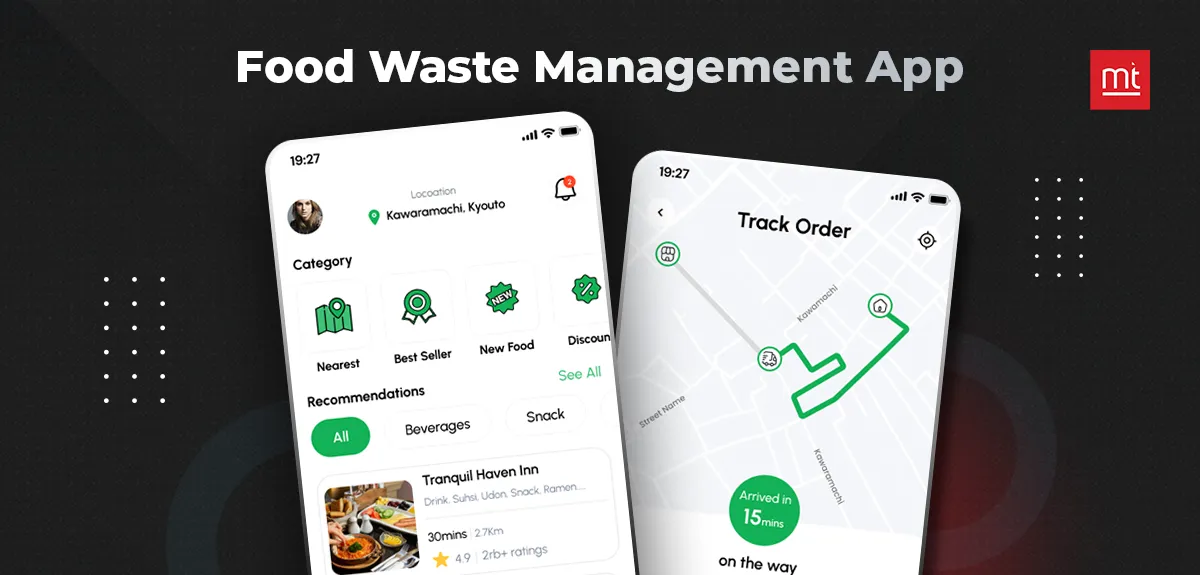
By linking consumers with local companies with extra food, food waste management apps hope to cut down on food waste. Users have the opportunity to buy inexpensive excess food before it spoils.
Two of them are "OLIO" and "Too Good To Go." Users may save money on leftover food because of "Too Good To Go" and its partnerships with local eateries. "OLIO" promotes a feeling of community by letting users share extra food with their neighbours and local communities, which helps to decrease food waste.
#2. Corporate Food Delivery App
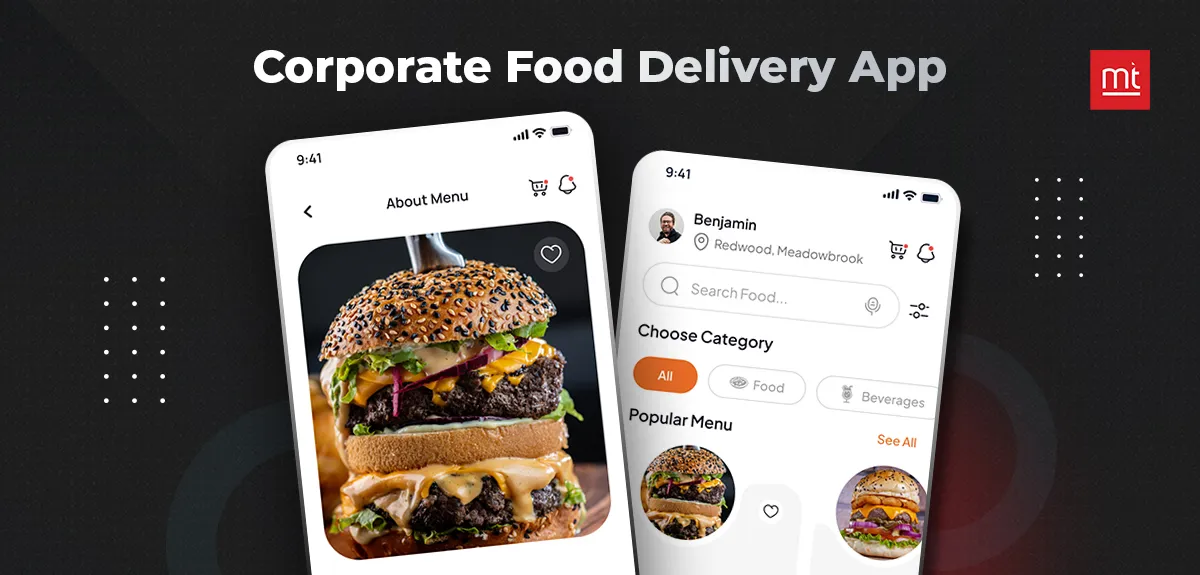
Food delivery app development companies may find workplace catering and meal delivery solutions using corporate food delivery apps. Companies may easily order food for meetings, events, and employee benefits using these applications, which link them with caterers and restaurants.
A few examples are "ezCater" and "Deliveroo for Business." Businesses may use "ezCater" to order catering from restaurants and food vendors.
The corporate meal delivery options provided by "Deliveroo for Business" enable businesses to order meals for different events. The survey estimates that the typical American spends $37.28 per week, $152.51 per month, and $1,843.72 per year on online meal delivery.
#3. Augmented Reality Food Menu App
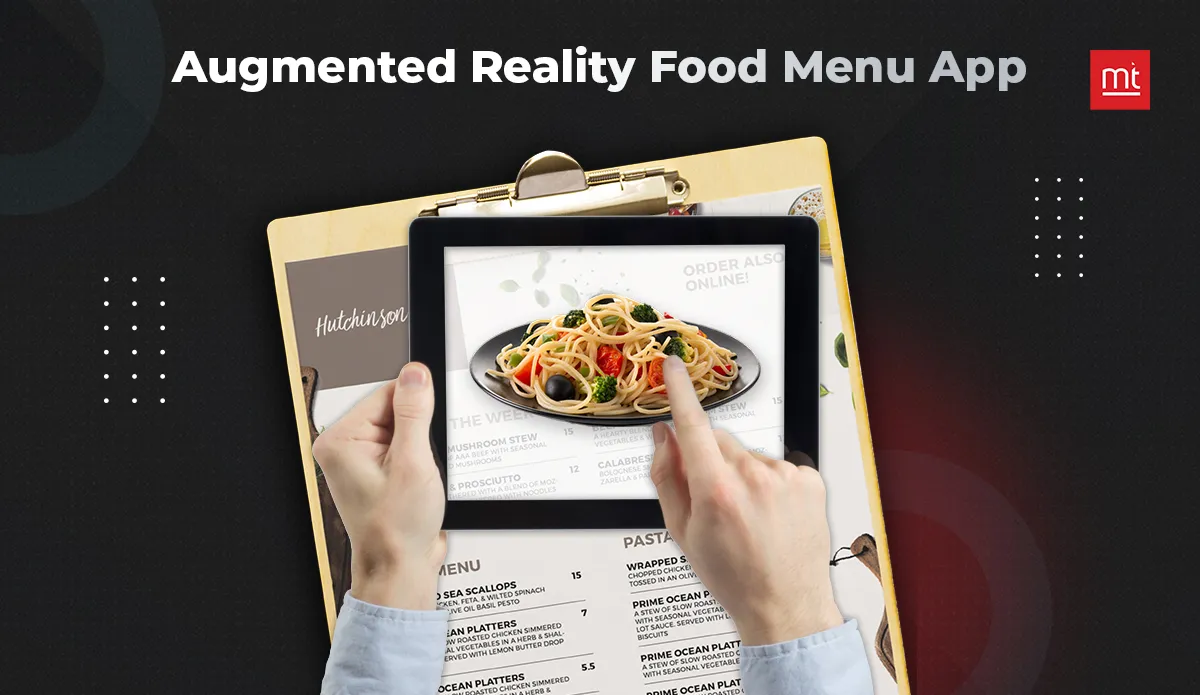
Apps that employ augmented reality to display menu items in three dimensions improve the eating experience. To assist users in making well-informed eating choices, these applications use augmented reality technology to display menu items.
There are other examples, such as "KabaQ" and "KabaQ AR Menu." "KabaQ" provides a platform for augmented reality menus, letting eateries display their offerings in three dimensions.
The "KabaQ AR Menu" creates an immersive eating experience by letting users see menu items in augmented reality.
#4. Restaurant Table Reservation App
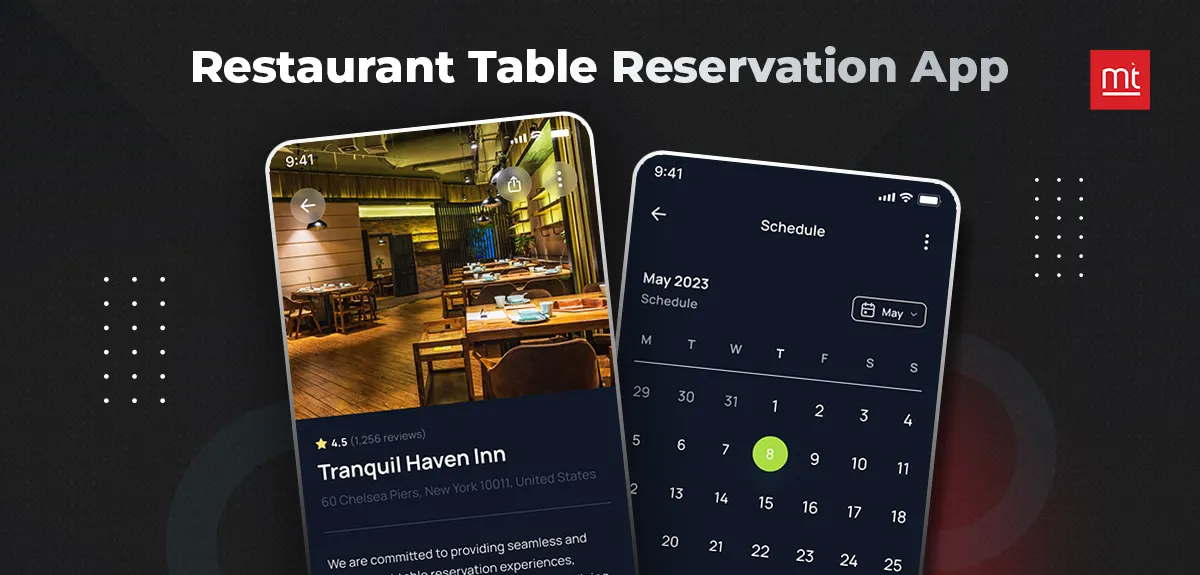
Apps that allow users to reserve restaurant tables make the procedure much easier. Users can quickly find new restaurants to try and book appointments through these applications.
Two such examples are "OpenTable" and "Resy."
The "OpenTable" app is well-known for its ability to facilitate table reservations at restaurants worldwide. Features like waitlist management and table management capabilities are available on the "Resy" platform, which is used for restaurant reservations.
#5. Grocery Delivery App
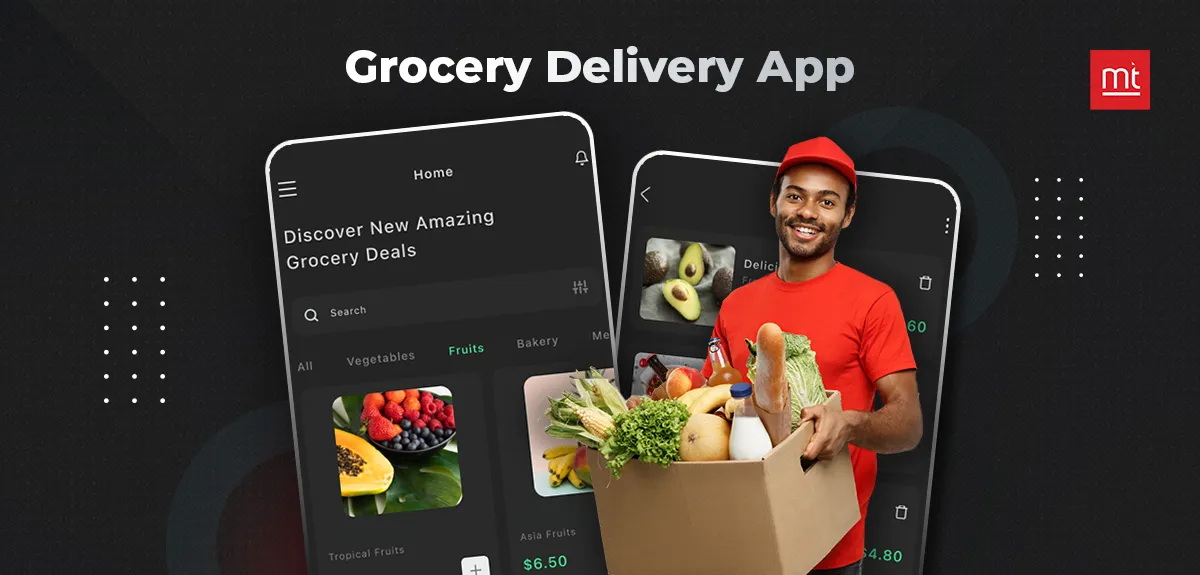
With the help of grocery delivery apps, people can place orders with nearby supermarkets and have their food sent right to their door. You may save time and energy by using these applications to grocery shop online instead of going to the store.
A few examples include "Instacart" and "Shipt." "Instacart" works with neighbourhood grocers to provide customers with the convenience of same-day food delivery, cleaning supplies, and more.
"Shipt" is an app that lets people order groceries from their favourite supermarkets and deliver them in as little as an hour.
#6. Virtual Cooking Classes App
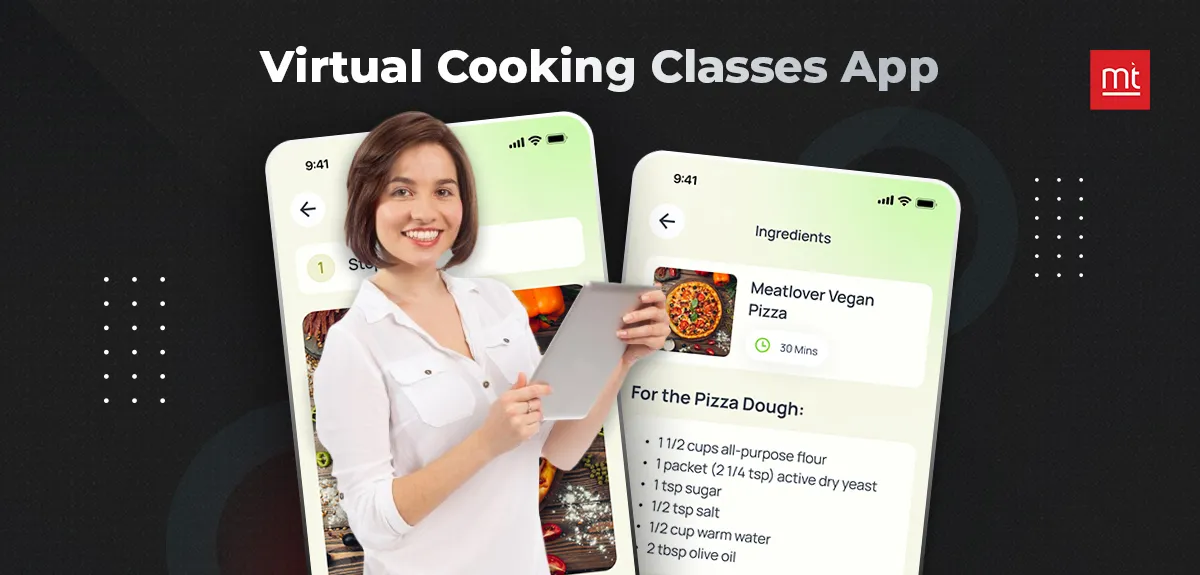
With virtual cooking course applications, people may learn how to cook without leaving home. Users of all experience levels may find an appropriate cooking instruction in one of these applications.
Two such examples are "MasterClass" and "Yummly." "MasterClass" provides online culinary lessons by famous chefs so that anybody may learn from the greatest in the business.
To assist its users in becoming better cooks and eating more healthfully, "Yummly" offers culinary lessons, recipes, and meal planning tools.
#7. AI-Powered Food Recommendation App
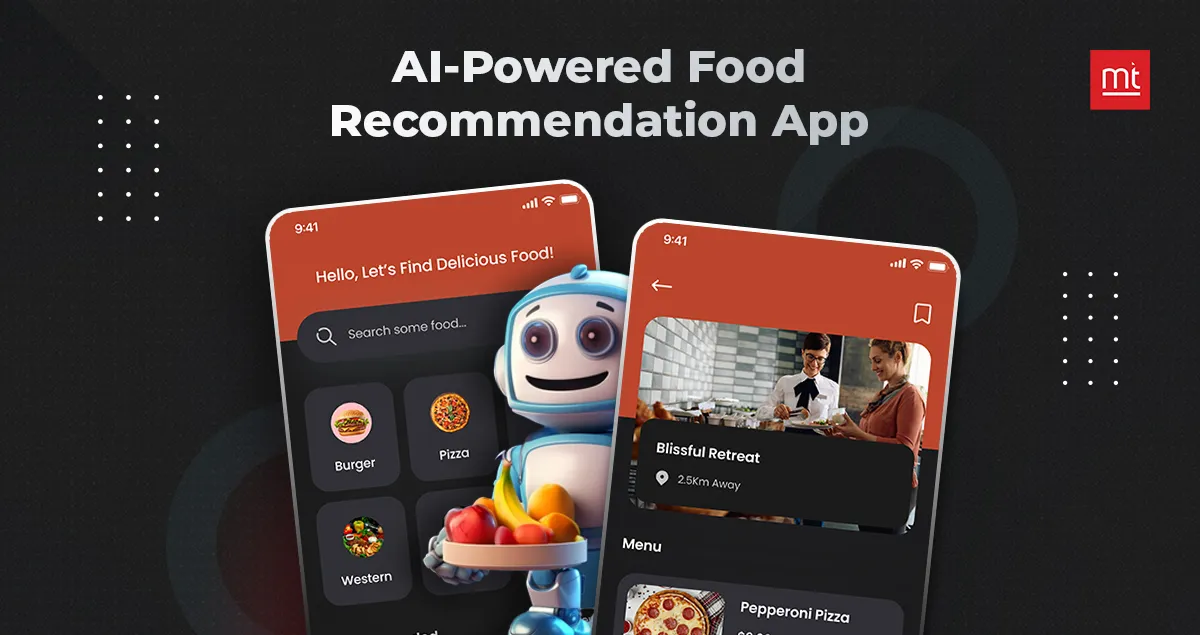
Apps powered by AI for food recommendations use artificial intelligence to study the user's preferences and deliver customised food recommendations. The apps let users find new dishes and restaurants that match their tastes and preferences.
These are “Tastewise” and “Dishq.” Tastewise identifies food trends and consumer preferences and provides personalised food recommendations for users and businesses. Dishq is a food recommendation engine powered by artificial intelligence and machine learning algorithms, allowing users to find new dishes exactly according to their preferences.
#8. Restaurant Inventory Management App
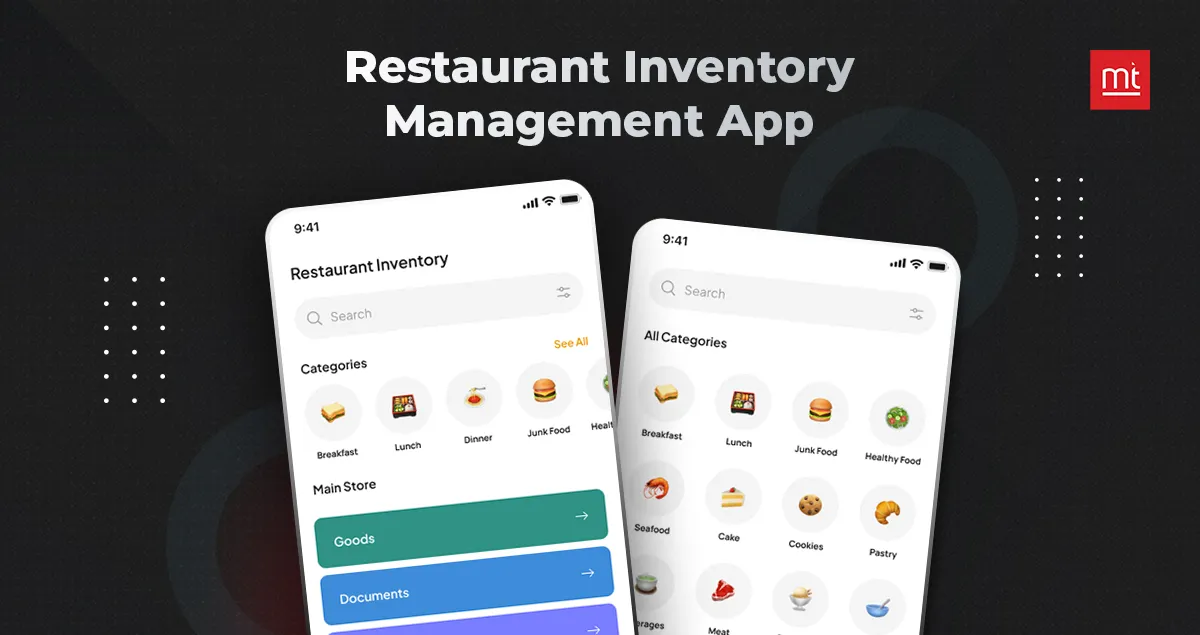
Restaurant inventory management apps help restaurants consolidate their inventory tracking, ordering, and management activities. For example, they provide functionalities like product tracking, vendor management, and reporting tools.
Some examples are “MarketMan” and “Toast Inventory”. With “MarketMan”, restaurants receive inventory management software to manage inventory levels, suppliers, and procurement processes.
Toast Inventory is a supplier of inventory management software for the restaurant industry that empowers them to manage adequate stock and reduce food loss.
#9. Nutrition and Food App
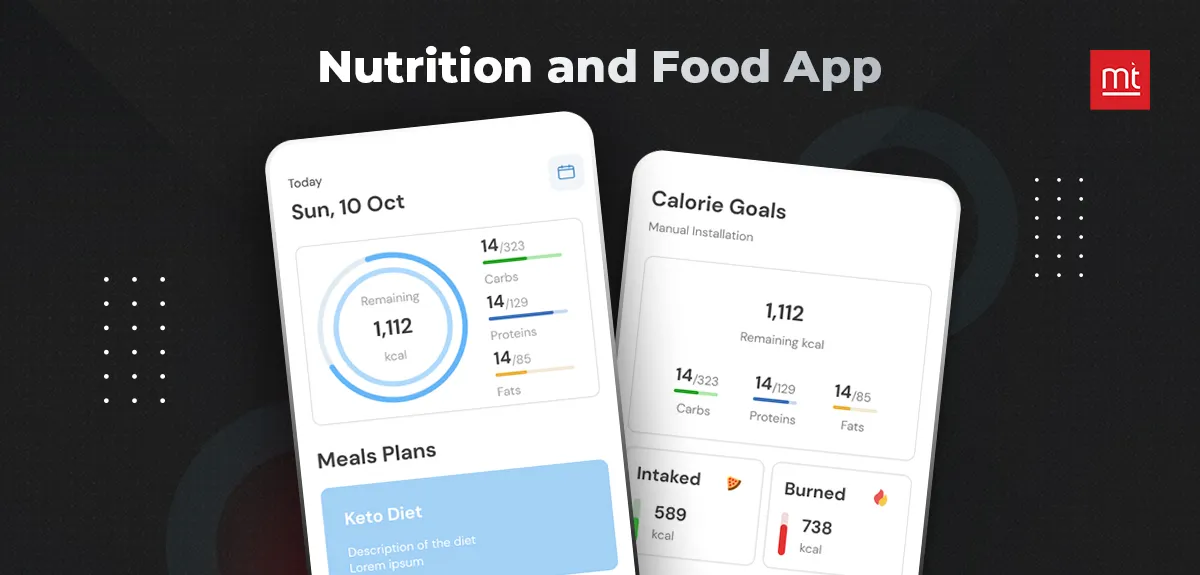
Nutrition and food applications give people instruments and materials to monitor their diet, organise meals, and select healthier food. Such apps provide functionalities of calorie counting, meal preparation, and dietary recommendations.
MyFitnessPal is a case in point, while Lifesum is another such example. It enables tracking nutrition and exercise, setting goals, and monitoring progress. Lifesum offers customised nutrition plans, meal logging, and health advice to reach the desired well-being.
#10. Frozen Food Delivery App
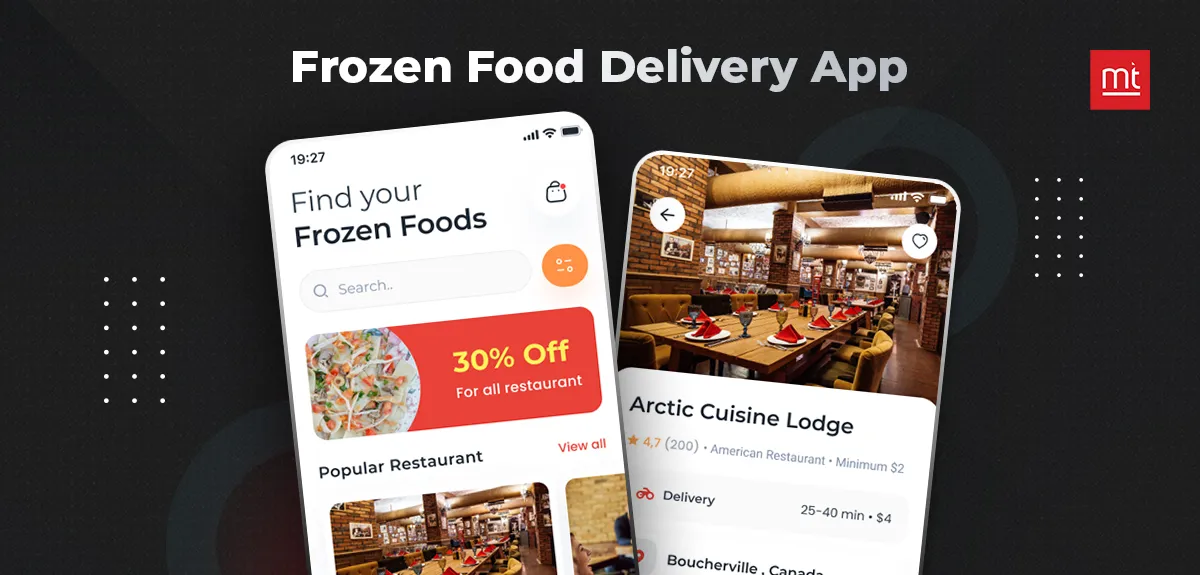
Frozen food delivery apps provide convenience and flexibility in that they deliver frozen meals and ingredients to the homes of their use. They allow users to choose from various frozen food categories, simplifying meal planning and preparation.
“Daily Harvest” and “Freshly” are among such examples. “Daily Harvest” provides frozen meals, smoothies, and snacks from organic ingredients right at the customer’s door. The freshly delivers chef-prepared frozen meals every week, offering easy and nutritious solutions for busy people.
Top 100+ Innovative Food App Ideas for Restaurants and Food Businesses
Here’s a curated list of over 100 innovative food app ideas designed to help you stand out in the competitive restaurant and food industry. We’ve organized the ideas into clear categories, making it easy for you to explore, identify trends, and discover opportunities to exceed customer expectations and deliver exceptional dining experiences.
🍽️ Top 10 Restaurant Operations & Management Apps Ideas
1. Smart Staff Scheduling App
The Smart Staff Scheduling App uses the forecasted demand for labour to determine the schedules for restaurant staff. The solution was designed to help restaurants manage employee "lines of communication" through automated weekly rosters, employee time off, attendance tracking and the integration of payroll data.
Example of Smart Staff Scheduling App:
2. Restaurant Queue Management App
Restaurant Queue Management Applications create digital waitlists for walk-in guests and help manage the crowd at peak times by giving guests a more efficient "way to be seated" by notifying them of their actual table availability and giving them a sense of order.
Example of Restaurant Queue Management App:
3. Kitchen Workflow Optimization App
The Kitchen Workflow Optimization App allows businesses to improve their back-of-house operations by organizing the incoming orders, tracking the stages of each recipe, and creating better systems for communication among kitchen stations. This improves the speed and efficiency of the operation, provides data on bottlenecks, recipe preparation times, and the efficiency of each station.
Example of Kitchen Workflow Optimization App:
4. AI-Based Demand Forecasting App
An AI Demand Forecasting App utilizes historical sales data, seasonaty weather & consumer behavioral trends to generate a demand forecast. This allows restaurant operators to better plan their staff, inventory and menu availabilty. In short, it allows them to better manage food waste, stock imbalances and helps improve efficiency within the operation, particularly among high volume restaurant operations and multi-location chains.
Example of AI-Based Demand Forecasting App:
5. Restaurant Compliance & Hygiene Audit App
A Restaurant Compliance Audit App allows restaurants to comply with food safety regulations by providing a means for restaurants to digitally store and manage their hygiene checklists and other compliance forms (logs, SOPs, corrective actions). The app allows restaurants to track the status of audits in real time and provides reminders and easy prep for health inspections, significantly reducing the potential for regulatory violations, penalties, or damage to the company's reputation.
Example of Restaurant Compliance & Hygiene Audit App:
6. Vendor & Supplier Management App
A Vendor/Supplier Management App allows restaurant operators to centralize supplier data (contact info, purchase orders, pricing) and delivery schedules so that restaurant operators can easily compare vendors, track supplier performance, and manage order processing. In short, the Vendor/Supplier Management App helps restaurants ensure that they have a consistent supply of ingredients at the best price. It also allows restaurants to develop better supplier relationships and provide more transparency through the procurement process.
Example of Vendor & Supplier Management App:
7. Multi-Outlet Restaurant Control App
A Multi-Outlet/Franchise Control App allows restaurant operators to manage franchise locations from one central point. These applications allow restaurant operators to monitor sales, inventory, staff performance and menus from all of their locations in real-time. The application can help restaurant operators to maintain a consistent brand throughout their franchises, provide easy access to reporting and allow for data-driven decision-making while allowing for greater operational flexibility at the location level.
Example of Multi-Outlet Restaurant Control App:
8. Cloud Kitchen Operations App
A Cloud Kitchen Operations application supports the distribution-based restaurant business model. It allows users to manage all of their online orders across all of the platforms from one application, in addition to managing the kitchen workflow, tracking inventory, and measuring performance analytics. The application assists cloud kitchens in providing a greater degree of accuracy when processing orders, decreasing the time it takes to prepare an order, and expanding multiple brands from one or multiple cloud kitchen sites.
Example of Cloud Kitchen Operations App:
9. Restaurant Expense Tracking App
A Restaurant Expense Tracking application provides operators with the ability to monitor all operating expenses, including inventory purchases, utility costs, employee wages, lease payments, and advertising expenses, each day. The application assists operators in organizing their expenses, syncing their financial information, and generating reports to help them improve their budgets, forecasts, and bottom lines by allowing them to determine if there are any unaccounted-for expenses.
Example of Restaurant Expense Tracking App:
10. Menu Costing & Profit Margin App
A Menu Costing and Profit Margin application allows operators to calculate the actual costs of each dish by breaking down the total cost to create that dish by analyzing the ingredients of each dish, the amount of the ingredient used in creating each dish, and the overhead costs associated with the operation. This information allows operators to develop pricing and identify high-profit margin meals, and to create a menu that will allow them to achieve their profitability goals through controlling their food costs.
Example of Menu Costing & Profit Margin App:
📦 Top 10 Ordering, Delivery & Logistics Apps Ideas
1. Hyperlocal Restaurant Delivery App
A Hyperlocal Restaurant Delivery application connects restaurants within a specified radius of an area with customers who want to receive their food. This type of application focuses on utilizing local delivery personnel, providing customers with real-time tracking of their orders, and quickly dispatching those orders to their destinations. This type of application allows restaurants to gain exposure, becoming less reliant on larger third-party delivery companies, and assisting them in providing quick and efficient delivery of food to their customers while keeping delivery costs low.
Example of Hyperlocal Restaurant Delivery App:
2. Pre-Order & Pickup App
Customers can pre-order and pick up their meals with a Pre-Order & Pickup App. It eliminates queues, enhances order accuracy, and assists restaurants in making optimal use of peak-time capabilities. The Pre-Order & Pickup App is a perfect fit for quick service restaurants such as bakeries, cafés, and others requiring prompt service.
Example of Pre-Order & Pickup App:
3. Subscription Meal Ordering App
With a Subscription Meal Ordering App, users can subscribe to regular meal plans on a daily, weekly, or monthly basis. Restaurants will receive predictable demand with consistent income and will experience decreased food waste by providing customers with regular meal subscriptions. Popular areas for Subscription Meal Ordering Apps are healthy meal services, tiffins, fitness dietary plans, and home-style meals.
Example of Subscription Meal Ordering App:
4. Late-Night Food Delivery App
The Late-Night Food Delivery App is targeted at customers who order food after regular business operating hours, such as students or night-shift employees. By highlighting the late-night menu of restaurants and optimizing customer logistics, this app allows restaurants to increase revenue during non-peak times.
Example of Late-Night Food Delivery App:
5. Eco-Friendly Delivery Tracking App
The Eco-Friendly Delivery Tracking App uses technology to identify the carbon footprint of food delivery and promote environmentally friendly delivery options, including using electric delivery or bicycle delivery. These apps help restaurants promote their sustainability while giving their customers the opportunity to choose an environmentally friendly delivery method.
Example of Eco-Friendly Delivery Tracking App:
6. Group Food Ordering App
The food order application for Group is a great way for multiple users to add items to their shared order, while also managing their individual payment methods, delivery locations, etc. It's a great tool to help organize teams, families or friends during a big social event, and it will also help to increase restaurant average order value.
Example of Group Food Ordering App:
7. Office Lunch Ordering App
An Office Lunch Order Application allows workplace & Corporate Lunch Order applications for Managing Bulk corporate order, Establish Scheduled Deliveries and provide Centralized Billing for Bulk Orders. Office lunch order applications streamline lunches, arrange for dietary restrictions and generate consistent high-volume Corporate Order.
Example of Office Lunch Ordering App:
8. Express Takeaway App
Express Food Takeaway applications are designed to help Customers place orders and skip waiting in line to pick up their food from restaurants. Restaurants can offer to Manage Takeaway-only Menus, Prepare their foods in a timely manner and Increase the Number of Orders processed. Takeaway applications work best for Quick service restaurants, Food Courtyards and Urban Restaurants that cater to a large number of people.
Example of Express Takeaway App:
9. Drone-Based Food Delivery App
The Drone Application is an example of delivery technology that will eventually allow Drones to Autonomous contactless deliveries of food items in designated areas. Drone Delivery applications aim to reduce traffic dependence and improve the speed at which food is delivered. Though development is still in its early stages, Drone Delivery represents the future of applying new technologies to the delivery of food items.
Example of Drone-Based Food Delivery App:
10. Smart Route Optimization for Delivery
Using AI and real-time traffic data, a Smart Route Optimization App will provide users with the quickest and most efficient delivery routes possible. Not only does this save on fuel costs, it also allows delivery partners to complete orders more quickly and effectively, allowing them to manage multiple orders simultaneously. In addition to being a must-have service for businesses that handle large amounts of food deliveries.
Example of Smart Route Optimization for Delivery App:
👨🍳 Top 10 Chef, Kitchen & Culinary App Ideas
1. Chef Collaboration & Networking App
A Chef Collaboration & Networking App is a platform for professional chefs, home cooks, culinary influencers, and restaurant owners to connect and communicate. Chefs can work together, share recipes, discuss food trends, and establish professional networks to gain exposure and find new job opportunities and stay in touch with the larger global culinary community.
Example of Chef Collaboration & Networking App:
2. Digital Recipe Management App
With the Digital Recipe Management App, chefs and restaurants can create digital recipes, and keep track of them for storage and organization. It eliminates confusion regarding ingredient quantities, portion sizes, and preparation steps, which means chefs can use the same recipe consistently from kitchen to kitchen. Additionally, these types of applications can help chefs ensure all new kitchen personnel receive the same level of training.
Example of Digital Recipe Management App:
3. Ingredient Substitution App
When chefs and home cooks lack certain ingredients, the Ingredient Substitution App provides alternatives. These apps take into consideration all aspects of flavor, texture, dietary restrictions, and allergies when making recommendations. Fast-paced kitchens find this to be an extremely valuable resource to ensure they can provide the same quality menu items without causing any added delays, creating waste, or causing disruptions to their menus.
Example of Ingredient Substitution App:
4. AI Recipe Creation App
An AI Recipe Creation App provides innovative culinary inspiration by creating recipes based on a user's available ingredients, cuisine of choice, dietary restrictions/preferences, and flavor profile. The app has value for both chefs and restaurants by providing opportunities to create menu ideas, test new menu innovations, create seasonal menus, and create custom orders that are specific to individual preferences. The app is intended to facilitate and accelerate the creation of recipes and inspire culinary creativity while streamlining manual trial and error processes.
Example of AI Recipe Creation App:
5. Cloud Kitchen Marketplace App
A Cloud Kitchen Marketplace App delivery-only restaurants, and commercial/shared kitchen spaces to connect with each other. As a result, chefs/brands have the option of listing their menus on the app, managing their orders, and gaining access to commercial/shared kitchen infrastructure without having to own and operate a live restaurant. The app provides a means for food entrepreneurs to launch their businesses more quickly and effectively and, as a result, generate significant growth.
Example of Cloud Kitchen Marketplace App:
6. Chef Hiring & Freelance App
A Chef Hiring & Freelance App allows restaurants/chefs to find new professional chefs, freelancers, and temporary work to fill their kitchens. It provides options for short-term gigs, full time hiring, and event-based type work. This app reduces the process of hiring for restaurants, verifies the qualifications of the chef, and provides chefs with flexible opportunities to work in a variety of restaurants, hotels and catering businesses.
Example of Chef Hiring & Freelance App:
7. Smart Kitchen Equipment Monitoring App
A Smart Kitchen Equipment Monitoring App monitors the performance and health of kitchen equipment through internet of things (IoT) sensors alerts staff of any temperature-related issues, maintenance required, or malfunctioning equipment. Monitors help prevent downtime, maintain food safety, and extend the life of kitchen equipment.
Example of Smart Kitchen Equipment Monitoring App:
8. Culinary Training App
Culinary Training Apps focus on structured learning for chefs, kitchen workers and culinary students, offering video lessons, certification programs, hygiene training, skill assessments among other types of training. For restaurants these applications provide a speedier onboarding of new employees and allow restaurants to keep their cooking standards consistent and provide a mechanism for steadily improving the skills of their kitchen teams.
Example of Culinary Training App:
9. Food Plating Inspiration App
Food Plating Inspiration Apps show high quality images and video examples of unique and attractive styles of plating food. Chefs and restaurants can use these applications for inspiration to create the most appealing way to present dishes, experiment with new plating ideas and styles, and create a more visually stunning final product. Fine dining establishments, food photographers and brands that focus heavily on social media can benefit from these applications significantly.
Example of Food Plating Inspiration App:
10. Recipe Scaling App for Restaurants
Recipe Scaling Apps allow restaurants to scale their recipes accurately based on portion size, number of people or orders placed. These applications allow restaurants to create consistency within their kitchens, reduce food waste, and make it easier for restaurants to prepare large batches of food, especially during peak times. Caterers, cloud kitchens and restaurants that serve large groups rely heavily on this type of application.
Example of Recipe Scaling App:
🧑🤝🧑 Top 10 Customer Engagement & Experience App Ideas
1. Restaurant Loyalty Program App
Restaurant Loyalty Program Apps allow restaurant owners to keep their customers returning to their restaurants repeatedly by offering points, rewards, discounts, exclusive offers, etc., to customers based on how often they come into the restaurant or spend money at the restaurant. This type of app digitizes loyalty cards, tracks customer activity, and allows restaurants to provide tailored promotions to loyal customers. These applications help to extend a customer's lifetime value to a restaurant while also motivating returning customers and building strong long-term bonds between the restaurant and the diner.
Example of Restaurant Loyalty Program App:
2. Digital Feedback & Review App
A Digital Feedback & Review App allows restaurants to receive real-time customer feedback about their dining experience via surveys, customer ratings, and customer reviews. These apps assist restaurants in identifying service gaps, improving the quality of the food they serve, and resolving problems quickly. Diners also have the opportunity to assess their dining experience through the apps, allowing them to stay informed about changes in the restaurant's business model or menu choices prior to making a reservation.
Example of Digital Feedback & Review App:
3. Gamified Dining Rewards App
A Gamified Dining Rewards App offers customers overall engagement with the restaurant experience through various challenges or rewards (badges) based on how many times they visit the restaurant, refer others, and/or order new menu items. These Gamified Apps create a sense of fun while increasing customer loyalty and return visits, particularly in crowded and competitive restaurant markets. Providing a unique dining experience, Gamified Dining Rewards Apps provide an opportunity for restaurants to be more competitive with one another.
Example of Gamified Dining Rewards App:
4. Customer Wait-Time Notification App
A Customer Wait-Time Notification App informs customers about table availability and wait times via mobile phone alerts. Customers may also relax or explore nearby businesses while waiting for their table. Similarly, because they do not have to stand while they wait for a table, restaurants can manage the number of customers waiting to be seated and improve guest satisfaction during peak hours.
Example of Customer Wait-Time Notification App:
5. Personalized Dining Experience App
A Personalized Dining Experience App allows restaurants to create individualized menus based on customers' preferences, order history, and dietary needs. By providing an individualized menu, the app increases customer satisfaction by providing a customized dining experience while also providing opportunities for upselling and personalizing their connection to the diner.
Example of Personalized Dining Experience App:
6. Restaurant Chatbot App
With the Restaurant Chatbot App, restaurant owners can automate customer service tasks via ChatBot technology. The ChatBot App provides automated staffing, improved customer support with faster response time, 24/7 availability, and consistent messaging to customers. The Restaurant Chatbot App delivers all of the benefits of traditional customer interactions without requiring an employee to be in the customer's physical presence.
Example of Restaurant Chatbot App:
7. Birthday & Occasion Dining App
Birthday & Occasion Dining Apps help restaurant owners to plan special occasions like birthday parties, anniversaries, groups, or whatever you might have. These Apps allow for customized offers and reminders as well as customized menus and event bookings to create memorable experiences for your customers. Utilizing an App such as the Birthday & Occasion Dining App will aid in driving more group bookings and therefore providing restaurants with an increased revenue opportunity.
Example of Birthday & Occasion Dining App:
8. Local Restaurant Discovery App
A Local Restaurant Discovery Apps assist users in finding local restaurants based on location, type of cuisine, and ratings among other customer preferences. Local restaurants use these Apps to gain visibility and have their offerings noticed by customers and to help them find "hidden gems" within their community. These Apps are crucial to any traveller searching for, or any food lover or community member looking for "high quality dining experiences".
Example of Local Restaurant Discovery App:
9. Table-Side Ordering App
Table-Side Ordering Apps enable restaurants to improve their efficiency and reduce order error rates while increasing customer satisfaction. Customers are able to browse menus, place orders and request services directly from their tables using a mobile device. By providing a customer the ability to browse the menu using the App, it enables restaurants to provide faster service and improve the average amount of money each customer spends because customers can easily add items and services.
Example of Table-Side Ordering App:
10. Voice-Based Food Ordering App
The Voice-Based Food Ordering App is an application that enables consumers to order food through voice commands from their smartphones and/or from a smartphone smart assistant (such as Alexa, Google Assistant, etc.). The app increases accessibility, offers ordering faster than standard apps or physical menus, and provides a hands-free experience to the user. Users will primarily benefit most from this app when placing repeated food orders, using the application within a smart home system, or engaging with an accessibility-oriented dining service.
Example of Voice-Based Food Ordering App:
📊 Top 10 Marketing, Sales & Growth App Ideas
1. Restaurant Digital Marketing App
The Restaurant Digital Marketing App (RDMA) is designed to support restaurants to digitally promote their brands and products across various channels such as email and SMS (and others including advertisements and/or in-app campaigns). This app allows restaurants to create promotions that target specific customer demographics, segment customers for promotions, schedule promotional campaigns in advance, and track the performance of promotional campaigns. The app simplifies the process for restaurants to increase their brand visibility, attract new customers, and drive repeat business by reducing their reliance on manual promotional efforts.
Example of Restaurant Digital Marketing App:
2. Influencer Collaboration App for Restaurants
The Influencer Collaboration App (ICA) is a tool that connects restaurants with food bloggers and other influencers and content creators to build promotional partnerships. Restaurants may easily locate and identify local influencers who can promote their products, manage their campaigns and evaluate their reach and ROI. This app makes collaborating with influencers simple for restaurants while establishing the credibility of restaurant brands through authentic social media exposure.
Example of Influencer Collaboration App for Restaurants:
3. Coupon & Deal Aggregator App
The Coupon & Deal Aggregator App (CDAA) is a digital tool that aggregates a restaurant's discounts, limited-time deals, and other promotional offers at one location. CDAAs increase foot traffic, boost off-peak sales, and attract customers who are looking for deals. Consequently, restaurants benefit from an increase in order volume and higher levels of visibility to price-sensitive diners.
Example of Coupon & Deal Aggregator App:
4. Restaurant CRM App
Centralizing customer information, order history, preferences, and communications, the Restaurant CRM Application allows restaurants to build better relationships with customers and increase customer retention by offering personalized promotions. The Restaurant CRM Applications also support loyalty programs, enable feedback tracking, and offer the ability to automatically follow up on guests, delivering greater value to customers through enhanced engagement.
Example of Restaurant CRM App:
5. AI-Based Upselling App
The AI-Based Upsell Application uses customer activity and order history data to provide real-time recommendations for additional purchases, combos, or premium options. The AI Based Upselling Application enables restaurants to increase their average order value as the customer is presented with the most relevant recommendation at the time of ordering. Additionally, by using the AI-Based Upsell Application, restaurants can generate more revenue without having to resort to aggressive sales tactics.
Example of AI-Based Upselling App:
6. Social Media Content Planner for Restaurants
The Social Media Content Planner Application allows restaurants to develop, plan, and distribute content through various social media platforms (e.g., Instagram, Facebook, Twitter). Content planners provide content calendar functionality, analytical capabilities, and suggestions for hashtags. Using a Social Media Content Planner Application can help restaurants save time, ensure consistency, and improve their ability to connect with food enthusiasts.
Example of Social Media Content Planner for Restaurants:
7. Restaurant Analytics & Insights App
Restaurant Analytics & Insights Application helps restaurant owners understand their sales data, customer behavior, peak times for business, and menu item performance trends. A Restaurant Analytics & Insights Application will enable restaurant operators to make informed decisions, set menus, and operate their businesses more efficiently. By transforming raw data into actionable insights, Restaurant Analytics & Insights Applications create data-driven business intelligence for restaurants.
Example of Restaurant Analytics & Insights App:
8. Seasonal Menu Promotion App
The Seasonal Menu Promotion Application is designed to help restaurant operators create, promote and track limited-time menus for holidays, festivals and other special occasions. The Seasonal Menu Promotion Application also provides targeted marketing campaigns, push notifications and the ability to create visual updates for menus. By using a Seasonal Menu Promotion Application, restaurants can generate excitement, increase customer engagement, and increase revenue during the holiday and festival season.
Example of Seasonal Menu Promotion App:
9. Online Reputation Management App
Online Reputation Management Apps allow restaurants the ability to manage reviews, ratings, and online mentions of their brand, quickly respond, analyze sentiment, and monitor their reputation across multiple channels. By providing a way to manage brand perception, increase trust in the brand, and stay competitive within review-driven economies, Online Reputation Management Apps offer a solid foundation for restaurants to maintain their brand image.
Example of Online Reputation Management App:
10. Restaurant Branding App
A Restaurant Branding App make it easy for restaurant owners to build a consistent and recognizable brand through creating logos, graphics, brand kits, and marketing assets. Branding Apps enable consistency across all restaurant menu items, social media, advertising campaigns, and websites. A strong brand gives restaurants a competitive advantage by allowing them to connect with customers on an emotional level.
Example of Restaurant Branding App:
🌱 Top 10 Sustainability & Ethical Food App Ideas
1. Farm-to-Table Tracking App
A Farm-to-Table Tracking App allow restaurants to track their ingredients from farms until they are delivered to restaurants' kitchens. By doing so, restaurants and their customers can be assured of transparency throughout the supply chain as well as freshness and sustainability. Farmers and suppliers provide restaurants with sourcing details, delivery timelines, and information about their suppliers. The relationship built between restaurants, consumers, and local farmers and suppliers contributes to increased consumer confidence in restaurants' ethical sourcing practices.
Example of Farm-to-Table Tracking App:
2. Local Farmers Marketplace App
Local Farmer's Marketplace Apps connect restaurants with local farmers and producers. By providing restaurants with a platform where they can view prices and product availability, restaurants can place bulk orders from local suppliers, manage deliveries, and source fresh, seasonal ingredients. By reducing the need for middlemen, Local Farmer's Marketplace Apps help reduce costs and create stronger local food networks.
Example of Local Farmers Marketplace App:
3. Carbon Footprint Tracker for Restaurants
Restaurants can utilize a Carbon Footprint Tracker App to assess how much carbon emissions are produced through food sourcing, energy consumption, packaging materials and delivery to customers. By using this tool to gain valuable information to support efforts to improve upon sustainability goals for their operations, or to create awareness about the sustainability goals they have set for themselves, restaurants can communicate those eco-metrics to their customers.
Example of Carbon Footprint Tracker App:
4. Sustainable Packaging App
A Sustainable Packaging App provides a way for restaurants to find, procure, and manage eco-friendly packaging alternatives. This is achieved by tracking packaging usage, cost, and benefits associated with environmentally friendly packaging alternatives. Using these apps also helps restaurants achieve their goal of reducing plastic usage and comply with sustainability regulations.
Example of Sustainable Packaging App:
5. Ethical Sourcing Verification App
An Ethical Sourcing Verification App provides a mechanism for restaurants to verify their suppliers meet standards for fair trading practices, labor conditions, and environmental sustainability. The app also enables restaurants to easily verify that their suppliers possess the proper certifications, and provide easy access to compliance verification records, thus allowing them to ensure that their suppliers comply with their ethical sourcing policy and to establish trust with customers regarding responsible sourcing throughout their supply chain.
Example of Ethical Sourcing Verification App:
6. Zero-Waste Restaurant App
A Zero Waste Restaurant App offers tools to assist operators in identifying how much food waste they generate and helps them develop ways to prevent, reuse, and recycle food waste. The app allows operators to gain insight into where food waste occurs and recommends multiple ways to reduce food waste within their restaurant operations. Reducing cost for restaurants while supporting sustainability goals is possible with the use of this app.
Example of Zero-Waste Restaurant App:
7. Leftover Food Donation App
A Leftover Food Donation App connects restaurants with various non-profit organizations, shelters and/or food banks to facilitate the safe donation of excess food. Using the Leftover Food Donation App, restaurants can schedule pickups, and track compliance requirements for donating food, and create a record of food donations for tax deduction purposes. Not only do Leftover Food Donation Apps reduce food waste, but they also assist in promoting community initiatives that support those in need.
Example of Leftover Food Donation App:
8. Seasonal Ingredient Sourcing App
The Seasonal Ingredient Sourcing Application enables Restaurants to find local suppliers and purchase ingredients within their seasonal availability. It promotes Menu Creation through Cost Reduction and Sustainable Farming Practices, as well presenting consumers the opportunity to taste fresher, higher-quality, and more authentic products.
Example of Seasonal Ingredient Sourcing App:
9. Organic Food Certification App
The Organic Food Certification Application helps Restaurants ensure that their Suppliers provide Organic Certified Products by allowing them to manage their Certification Documentation, complete Audits, and maintain compliance with Federal and/ or State Food Safety Regulations. This Application gives Restaurants confidence in Marketing their Organic Products as such and provides Consumers with confidence in selecting healthy food.
Example of Organic Food Certification App:
10. Sustainable Menu Planner App
The Sustainable Menu Planning Application is an Application used by Restaurants to create Menus that emphasize and incorporate Low Impact Ingredients, Seasonal Produce, and Waste Reduction Goals. This Application seeks to find a balance between Profitability and Sustainability while providing Eco-friendly options for customers.
Example of Sustainable Menu Planner App:
🥡 Top 10 Food Tech & Innovation App Ideas
1. Smart Restaurant POS Integration App
The Smart Restaurant Point-Of-Sale Integration Application connects the Point-of-Sale System of a Restaurant with any other systems related to Order Fulfillment, Inventory Management, Payment Acceptance, and Analytics. It allows the sale data from these multiple platforms to be synchronized in Real Time and results in fewer Manual Entries, Greater Operational Accuracy, and Streamlined Workflows. This Application also enables Restaurants to improve their understanding of their Business and will enable them to efficiently Expand their Operations across multiple Platforms.
Example of Smart Restaurant POS Integration App:
2. Blockchain Food Traceability App
The Blockchain Food Traceability Application provides clarity and transparency throughout the Chain of Custody for food products by storing each step of the Supply Chain on a Blockchain-based System. This Application assists Restaurants with verifying Supplier Authenticity and Food Safety and Quality Compliance. The use of the Blockchain will create greater Trust among Consumers, Diminish Opportunities for Fraud, and Provide Restaurants with the ability to Comply with Regulations and Laws.
Example of Blockchain Food Traceability App:
3. AI Price Optimization App
AI Price optimization applications evaluate the patterns of demand, class competition, cost of food and seasonality to provide pricing recommendations for menus. A restaurant can modify its prices quickly and easily to optimize profits while still being competitive. The applications reduce guesswork and help restaurants maintain greater control of their margins.
Example of AI Price Optimization App:
4. Digital Menu Board App
A Digital Menu Board App can remotely display dynamic menus, update menu items in real-time using visuals, and advertise promotions. Through the use of this technology, restaurants are able to quickly change prices, highlight best-selling products, and remotely generate new content. By utilizing the latest technologies available for menuboards, they not only create appealing visuals but also save on printing costs.
Example of Digital Menu Board App:
5. Facial Recognition Payment App
A Facial Recognition Payment App allows customers to make secure and contactless payments using their facial biometrics. It speeds up the payment process at the cash register and increases the level of security associated with online food ordering, while also giving customers a "futuristic" dining experience. Facial recognition applications are highly advantageous to technology-based food businesses as well as fast-casual restaurants.
Example of Facial Recognition Payment App:
6. Smart Vending Food App
Smart vending food applications manage food vending machines using cashless payments, automatic inventory tracking and 24/7 product monitoring. Food establishments and food brands can sell food through vending machines without having to hire additional employees to manage restocking schedules.
Example of Smart Vending Food App:
7. IoT-Based Kitchen Monitoring App
IoT kitchen monitoring apps collect and send information in real-time about kitchen temperatures, the functioning of kitchen appliances and energy consumption of the kitchen. This information can help restaurants avoid appliance failures, maintain food safety and help reduce energy expenses. Therefore, IoT applications are a must-have in any commercial kitchen where compliance requires tracking of kitchen conditions.
Example of IoT-Based Kitchen Monitoring App:
8. Automated Food Quality Check App
An Automated Food Quality Check App verifies the quality of food before it's served. It utilizes advanced algorithms to assess the freshness, quality, and presentation of foods. As additional benefits, these apps improve customer service levels due to the reduced number of mistakes made by human staff members.
Example of Automated Food Quality Check App:
9. Food Tech Startup Marketplace App
A Food Tech Startup Marketplace App, restaurant owners are able to connect with creative food technology solutions (the SaaS), service providers, equipment manufacturers, etc. The Food Tech Marketplace App is used by modern restaurants as a way to find and collaborate on the adoption of new restaurant technologies.
Example of Food Tech Startup Marketplace App:
10. AI Voice Assistant for Restaurants
By utilizing, natural language processing, the AI Voice Assistant for Restaurants manages telephone orders, makes reservations, provides answers to frequently asked questions (FAQ's), and provides customer support. The AI Voice Assistant reduces missed phone calls as well as improves response time while providing the restaurant with round-the-clock support - this can be particularly useful for restaurants experiencing high volume of business.
Example of AI Voice Assistant for Restaurants:
🌍 Top 10 Niche & Community-Based Food App Ideas
1. Street Food Discovery App
The Street Food Discovery App helps users identify local street food vendors and carts (as well as food trucks) and provides information about local specialties along with hygiene ratings, peak business hours, and consumer ratings. Street Food Discovery Apps support local vendors and consumers searching for authentic, inexpensive, and trendy street food experiences.
Example of Street Food Discovery App:
2. Home Chef Marketplace App
Through the Home Chef Marketplace App, individuals who prepare hom
emade meals are able to connect with customers wanting these meals. Home cooks can set up their own menus, manage their orders and delivery schedules, and comply with food safety regulations. The Home Chef marketplace app supports micro-entrepreneurs while providing consumers with an authentic home-cooked meal.
Example of Home Chef Marketplace App:
3. Regional Cuisine App
The Regional Cuisine App is an application designed to be inclusive of different regional and cultural cuisines, as well as the history behind the food. The app not only helps to maintain the culinary archives of a particular region, but it also provides users with an opportunity to experience authentic dining experiences in a specific location.
Example of Regional Cuisine App:
4. Festival & Pop-Up Food App
The Festival & Pop-Up Food App is an application providing a complete listing of food festivals, pop-up restaurants, weekend food markets, and temporary food events. Users of this app will have access to event dates and times, menus for each event, and the ability to purchase tickets in advance. The app also offers restaurants and food vendors greater exposure to customers through the promotion of event-based visits.
Example of Festival & Pop-Up Food App:
5. Pet-Friendly Restaurant Finder App
The Pet-Friendly Restaurant Finder App has been designed to help pet owners find restaurants and cafes that welcome pets. The app has filters for both outside seating and the availability of pet elements, and it provides reviews from other pet owners, so they can find restaurants with activities specifically for them and their pets. With this trend of accommodating pets within the food industry continuing to grow, the Pet-Friendly Restaurant Finder App is also aimed towards the growing community of pet owners.
Example of Pet-Friendly Restaurant Finder App:
6. Vegan & Plant-Based Restaurant App
The Vegan & Plant-Based Restaurant App provides users with an easy way to search for vegan, vegetarian, and plant-based meal options. The app contains menus with ingredient transparency as well as multiple dietary filters for users looking to make ethical food choices and/or are conscious of what they eat for health and environmental reasons.
Example of Vegan & Plant-Based Restaurant App:
7. Kids-Friendly Restaurant App
The Kids-Friendly Restaurant App will assist parents in locating restaurants that offer kid-friendly menus, provide play areas, and family seating options. The app will include reviews from other parents and will aid parents when dining out with children by decreasing their stress levels when they dine out with them, while at the same time encouraging more families to visit restaurants frequently.
Example of Kids-Friendly Restaurant App:
8. Senior-Friendly Meal App
Senior-Friendly Meal Apps offer nutritional meals that appeal to seniors and are easy to eat. The App allows you to plan meals, subscribe to meal delivery service and choose your dietary preferences. Most importantly, Senior-Friendly Meal Apps are convenient for both caregivers and seniors and encourage seniors to maintain healthy aging.
Example of Senior-Friendly Meal App:
9. Traveler's Local Food App
Traveler Local Food Apps allow tourists to find local eateries, hidden gems and offer visitors a cultural experience through food. Each travel app offers location-based recommendations and offline transportation. A Travel Local Food App enhances the overall experience of traveling for tourists through the discovery of unique dining options.
Example of Traveler's Local Food App:
10. Midnight Cafes Finder App
A Midnight Cafe Finder app gives users an easy way to locate bakeries, cafes and dining establishments that are open late into the night. The app provides a real-time listing of business hours, menus and safety ratings. A Midnight Cafe Finder App is popular with college students, those who work at night and anyone who prefers to dine late into the evening.
Example of Midnight Cafes Finder App:
💳 Top 10 Payments, Finance & Business App Ideas
1. Contactless Dining Payment App
A Contactless Dining Payment App will provide diners with the option to pay their bill without any physical contact by using QR codes, NFC or your mobile wallet. This technology allows the merchant to quickly process customer payments, maintain better hygiene and provide convenience to the customer. With the speed of checkout, restaurants see a greater volume of customers. Restaurants can also benefit from an increased speed of recovery from cash handling and the simplicity of reconciling their payments.
Example of Contactless Dining Payment App:
2. Split Bill & Tip Management App
Split Bill & Tip Management Apps allow diners to calculate their share of the bill accurately and manage the tip portion of their bill. These applications provide diners with accurate and easy-to-use ways to share bills with others and positively affect the overall customer experience and the payment process at restaurants by reducing the potential for billing disputes.
Example of Split Bill & Tip Management App:
3. Restaurant Invoice Management App
Restaurant Invoice Management Applications digitize the creation of bills, supplier invoices and payment tracking. Using a Restaurant Invoice Management application enables a restaurant to effectively manage accounts payable while reducing the possibility of missing a payment or having unorganized financial records. In addition, these applications offer enhanced transparency to the restaurant management team and streamline the audit process.
Example of Restaurant Invoice Management App:
4. Franchise Management App
Restaurant Chain Franchise Management Applications are designed for restaurant chains to manage their individualfranchise locations via a single dashboard. This can provide a restaurant chain with a unified operational platform, performance metrics, assurance of brand compliance and simple reporting. The integration of these applications is critical for effective growth of restaurant brands on a national level.
Example of Franchise Management App:
5. Food Business Loan App
A Food Business Loan App provide fast access to working capital, equipment loans, or expansion funding for restaurants and food entrepreneurs. Food Business Lender Applications provide restaurant/digital applications, instant determination of eligibility, and quick disbursements specifically for food businesses.
Example of Food Business Loan App:
6. Subscription Billing App for Restaurants
Subscription Billing Applications enable restaurants to manage recurrent meal plans, membership subscriptions and loyalty subscriptions. The subscription billing applications automate billing periods, invoicing and renewals of the subscriptions. These applications are ideal for tiffin services, cloud kitchens and meal prep businesses.
Example of Subscription Billing App for Restaurants:
7. Vendor Price Comparison App
A Vendor Price Comparison Apps enable restaurants to compare the price of food products from several suppliers in real time. These applications assist in improving food cost efficiency, supplier visibility and conduct more informed purchasing decisions. These applications assist restaurants in managing food costs and improve profit margins.
Example of Vendor Price Comparison App:
8. Restaurant Tax & GST App
The Restaurant Tax & GST App makes tax calculations, GST filing, invoicing and compliance easy for restaurant owners by helping them avoid potential penalties, maintain input tax credits and remain ready for an audit. This is especially helpful for food businesses that have multiple outlets and are continuing to grow.
Example of Restaurant Tax & GST App:
9. Profit Forecasting App
The Profit Forecasting App looks at a restaurant's historical sales, expense and trend data to project future revenue and profit. This information allows restaurateurs to budget, maintain control over their costs and prepare for accruing seasonal adjustments. Both of These apps enhance the restaurant owner's ability to make decisions that are better-informed financially.
Example of Profit Forecasting App:
10. Digital Wallet for Restaurants
A Digital Wallet for Restaurants provides restaurateurs with an online platform to deposit and accept payments, manage refunds and process payouts all in one place. This is especially useful for managing the cash flow of a restaurant and integrating the Digital Wallet with POS systems and delivery platforms.
Example of Digital Wallet for Restaurants:
🎉 Top 10 Events, Catering & Experiences App Ideas
1. Catering Management App
The Catering Management App allows restaurant owners and caterers to manage catering orders, track client inquiries, coordinate employee scheduling and coordinate the logistics of delivery and/or events more efficiently. In addition to streamlining catering operations, Caterers can also reduce mistakes and ultimately improve the efficiency of operating large-scale catering operations through using the Catering Management App.
Example of Catering Management App:
2. Event-Based Food Booking App
Event-Based Food Booking Apps enable customers to order food/catering for their events such as conferences/festivals/private parties. With event-based food booking apps, restaurants are better able to manage their capacity, customize their menus and efficiently process bulk orders.
Example of Event-Based Food Booking App:
3. Wedding Menu Planning App
The Wedding Menu Planning App helps both families and wedding planners create custom menus, manage dietary preferences as well as coordinate with chefs for tastings, approvals and ordering needed for large wedding events.
Example of Wedding Menu Planning App:
4. Corporate Catering App
Corporate Catering Apps allow for easy planning of staff lunches, bulk purchase of supplies and the ordering of lunches for the workforce. The majority of these apps contain features such as recurring ordering, menu rotation, billing management, etc., that makes corporate dining products available with the least amount of complexity.
Example of Corporate Catering App:
5. Food Truck Locator App
Food Truck Locator Apps give a user real-time access to food trucks located near them via their smartphone or tablet. The features of these apps utilize GPS to show where the food trucks are located and what items are on their menu; the hours of operation and reviews of each food truck also add to the overall experience of eating on the go.
Example of Food Truck Locator App:
6. Pop-Up Restaurant App
Pop-Up Restaurant Apps provide users with information regarding temporary or seasonal dining experiences, allowing customers the opportunity to explore unique menus and to reserve seats for limited seating at pop-up restaurants while also being alerted about events that are exclusive to that particular pop-up restaurant.
Example of Pop-Up Restaurant App:
7. Theme-Based Dining App
Theme-Based Dining Apps allow Customers to explore restaurants with specific themes. For example, a restaurant may host a Medieval Dinner or a Mystery Restaurant Dinner or serve cultural cuisine. Restaurants have the ability to promote their themed experiences and attract customers who are interested in that theme.
Example of Theme-Based Dining App:
8. Chef-at-Home Booking App
Chef-at-Home Booking Apps conveniently connect customers to Professional Chefs who can create individualized meals within the customer's own home. Features offered by these apps include the ability to select the menu, choose a time, make a payment and review the Professional Chef after the meal has been prepared.
Example of Chef-at-Home Booking App:
9. Food Tasting Event App
Food Tasting Event Apps allow customers to locate Culinary Food Tasting Events, purchase tickets and Discover New Cuisines through attending a Tasting Event. Restaurants can easily promote special Tasting Menus and allow customers to make reservations for Tasting Events.
Example of Food Tasting Event App:
10. Restaurant Experience Marketplace App
Restaurant Experience Marketplace Apps connects customers to curated and interesting Dining Experiences, like chef-led workshops, wine-pairing dinners and exclusive restaurant events. Features of these apps include streamlined processes for Booking experiences, Payment and Reviews.
Example of Restaurant Experience Marketplace App:
How Much Does it Cost to Develop a Food App?
The cost to develop a food app could differ drastically depending on the nature of features, platforms and the complexity needed. A simple food app with enough features like user registration, menu management and order placement might range from $5,000 to $10,000.
As for a more advanced app with additional features like payment gateways, GPS tracking, and reviews and ratings, the cost can range from $10,000 to $30,000.
Here is the table for cost factors breakdown to determine the development cost of a food app:
Feature | Basic | Medium | Advanced |
User Registration | $500 - $1,000 | $1,000 - $2,000 | $2,000+ |
Menu Management | $1,000 - $2,000 | $2,000 - $5,000 | $5,000+ |
Payment Gateway | $500 - $1,500 | $1,500 - $3,000 | $3,000+ |
GPS Tracking | $1,000 - $2,000 | $2,000 - $4,000 | $4,000+ |
Reviews & Ratings | $500 - $1,000 | $1,000 - $2,000 | $2,000+ |
Order Tracking | $1,000 - $2,000 | $2,000 - $4,000 | $4,000+ |
AI-Powered Features | - | $3,000 - $6,000 | $6,000+ |
Multiple Platforms | - | $1,000 - $3,000 | $3,000+ |
Customization | - | $2,000 - $5,000 | $5,000+ |
Testing & QA | $1,000 - $2,000 | $2,000 - $4,000 | $4,000+ |
Maintenance & Support | $500 - $1,000 | $1,000 - $2,000 | $2,000+ |
How ManekTech Helps To Transform Food App Ideas into Reality?
ManekTech is the leading android and ios app development company with great hands-on expertise in developing food delivery apps that fly with trends and business requirements. At ManekTech, our dedicated team of developers implement the best approach to bring your food app ideas to life. Here are neck-to-neck app development approaches to shape food delivery app ideas for your business:
1. Consultation and Ideation
ManekTech begins with the customer’s vision, goals, and audience. The team carries out this through face-to-face discussions and brainstorming sessions with clients, who clarify the food app ideas, important features, and project objectives and timelines.
2. Design and User Experience
Manektech emphasises UX and UI design to make food apps visually appealing, easy to use, and interesting. The team collaborates closely with the customer to design wireframes, prototypes, and mockups that represent the brand’s identity and attract the target group for a great user experience.
3. Development and Implementation
Skilled developers at ManekTech are committed to putting food app ideas to life using an agile development methodology that provides room for flexibility, transparency and timely delivery.
The team's work includes backend development and API integrations, frontend implementation and quality assurance testing, which guarantee that the app is productive, well-functioning and reliable.
Conclusion
The growing food app market offers entrepreneurs and businesses an attractive market for innovation. It disrupts traditional dining and accommodates modern consumers’ needs. Whether reducing food waste, improving the dining experience, or promoting healthy living, food app ideas could have a huge spark in the dining world.
As the best App development company in the USA, Manek Team offers impressive handholding and professional support to help entrepreneurs transform their food app ideas into a reality.
Our team uses innovative technologies, client-specific solutions, and industry standards to develop high-quality software with an easy-to-use interface that makes it easy for customers to place orders. Contact us today to execute the best food delivery app idea that will grow your business and create a significant customer base.

Nikhil Solanki
Mobile Lead
Nikhil Solanki has 10+ years of experience in App Development and currently works as the Mobile Lead at ManekTech. He is an experienced Mobile lead with a demonstrated history of working in Mobile's information technology and services industry.

Subscribe to Our Newsletter!
Join us to stay updated with our latest blog updates, marketing tips, service tips, trends, news and announcements!