Project Overview
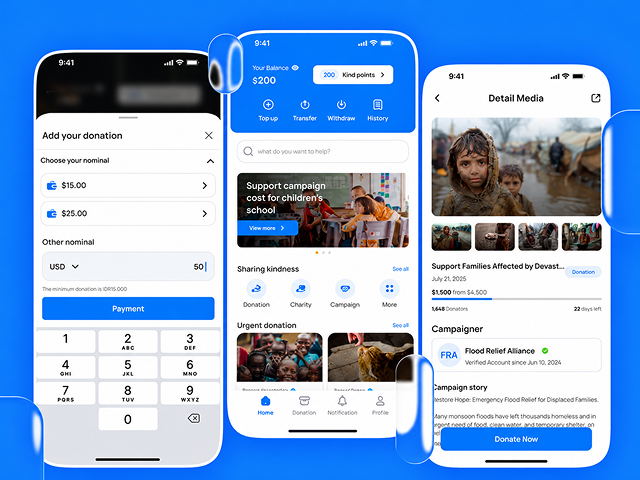
The AI-Powered Fundraising App is a fundraising app built using artificial intelligence technology for a nonprofit organization in the USA that is working to help underprivileged children with education, health care, food, and other basic necessities through donations.
The organization partners with other organizations in India, Kenya, and the Philippines to help families and communities. But the problem was that all activities related to donor management, creating campaigns, and following up with them were done manually with the help of spreadsheets, emails, and some basic CRM tools.
Being a trusted Android app development company in the USA, we carefully prioritized high-impact features to keep the app development cost efficient while still delivering a powerful and user-friendly platform. We have designed a fundraising platform that has integrated donor management, creating campaigns, tracking donations, and providing intelligent insights in one platform. This AI-enabled fundraising application is built using ReactJS and Flutter technologies.
Project Objectives
- Create an AI-driven fundraising platform for web and mobile users.
- Tailor donor outreach through AI-based recommendations.
- Enhance recurring donations through targeted campaigns and reminders.
- Streamline the process of creating fundraising campaigns and communicating with donors.
- Forecast campaign results based on data analytics.
- Offer secure and easy methods of online donations.
- Increase transparency through donation tracking and campaign updates.
- Reduce manual effort and improve fundraising budget allocation.
- Benefit nonprofit campaigns active in various locations.
Let's Shape Your Project Together
Have an idea, a challenge, or a new project in mind? Our team is here to help.
Business Challenges
1. Manual Donor Management and Campaign Activities
Spreadsheets, emails, and a simple CRM were used to track donor data, organize fundraising activities, and follow up on leads and interactions. Such an approach wasted lots of time and made it impossible to ensure accurate donor information storage. There is a need for a special fundraising platform that will facilitate the work process.
2. Falling Interest of the Donors
The use of general email campaigns proved to be ineffective since the information provided by the campaigns could not be personalized and thus engage donors in the process of fundraising. Personalization and tracking of donors’ interests became essential.
3. Lack of Advanced Analytics of Campaign Performance
Without any special analytics of fundraising campaign performance, there are no ways to find out what will help raise money and how successful the campaign will be.
4. Increasing Transparency to Gain Trust of the Donors
It is important nowadays to provide the donors with detailed information about charity campaigns and explain how donations are going to make changes.
5. Integration and Security Challenges
There were also technical difficulties associated with integrating donor data coming from various CRM systems and other systems. In particular, since donor data and financial information are very sensitive, there were also necessary security considerations.
6. AI Advancement vs Budget Restrictions
The nonprofit organization in question faced the challenge of implementing an innovative fundraising platform within limited budget constraints. This involved choosing the right features and functionality to implement within the available budget.
Our Solutions
In order to modernize fundraising operations, we created an AI-powered fundraising application that helps engage donors and provides campaign management, donation management, and analytics capabilities. Our development team focused on high-value features to build a practical solution that supports the organization’s daily operations and its mission of helping underprivileged children.
Using ReactJS for the web application and Flutter for the mobile app, we created an integrated fundraising experience for both donors and administrators. During development, our dedicated Android developer addressed technical challenges such as inconsistent and unstructured donor data, integration with outdated CRM and email tools, and the need for robust data security to protect sensitive donor information.
AI-Powered Donor Segmentation and Personalization
AI donor segmentation was introduced to the platform to classify the donors depending on their interests, past donations, and donation patterns. Such classification will allow the organization to offer the donor more appropriate campaigns and messages than generic ones. In addition, a customized campaign and notification system is provided to let the donor find causes of interest.
Predictive Campaign Planning
We added predictive analytics to enable the fundraising team to make informed decisions about campaign opportunities as well as to discover initiatives with higher potential according to available data.
Simplified Campaign Creation
The software is equipped with a drag-and-drop campaign builder, which makes it possible for the nonprofit staff to run and manage fundraising campaigns more easily. AI-based visual suggestions help the team create effective campaign pages without spending time on writing the same information repeatedly.
AI Chatbot for Help With Donations
An AI chatbot was implemented to give answers to frequent questions and provide assistance to donors in understanding fundraising campaigns and making donations. It is aimed at saving the team’s time in answering routine questions.
Real-Time Fundraising Analytics
An administrative dashboard makes it possible to get real-time analytics regarding donor activity and progress of fundraising campaigns.
As a trusted mobile app development company USA, the fundraising app gave noticeable results within six months of launch.
Key Benefits
- Personalization of donor communications using artificial intelligence recommendations.
- Repeat donations using relevant campaigns and timely reminder messages.
- Easier process to create and manage campaigns.
- Better decision-making regarding fundraisers using predictive analytics.
- Facilitate easy tracking of donations and updates of campaigns.
- Support for one-off and recurring donation options.
- Automation to reduce manual effort.
- Chatbots for assistance in engaging the donor.
- Campaign performance analysis via central dashboards.
Key Features
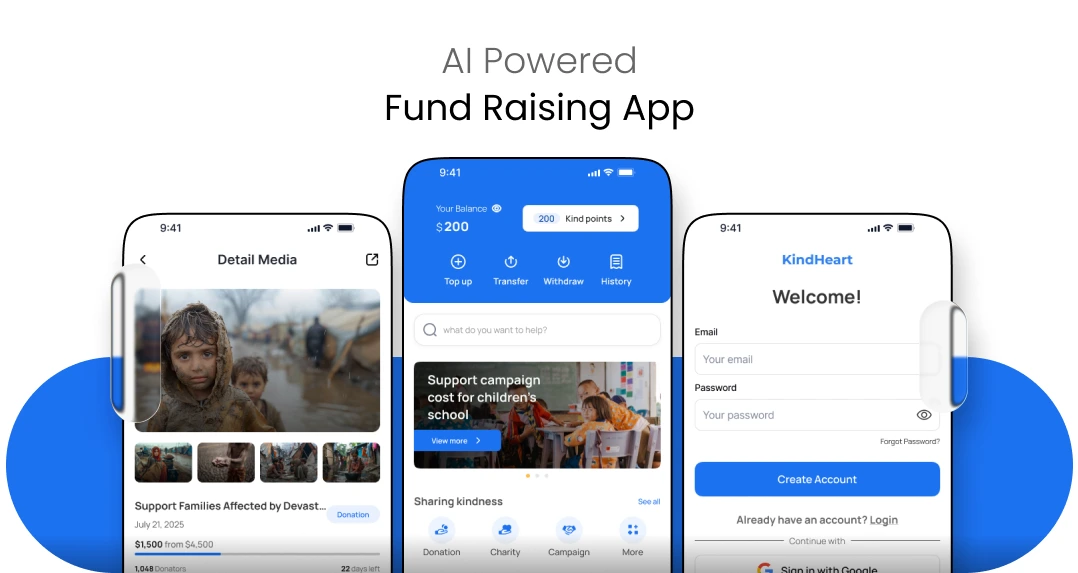
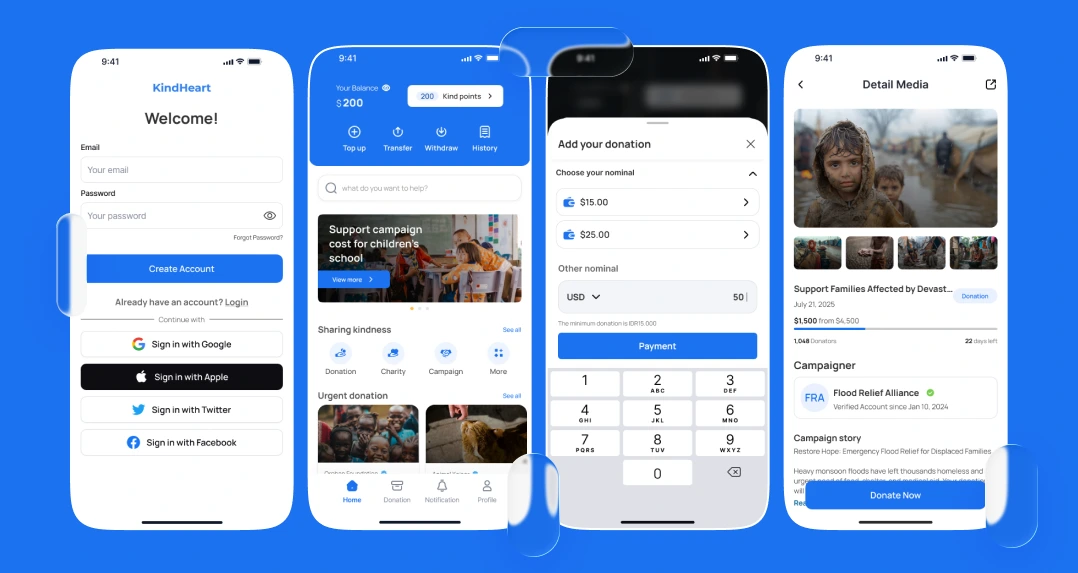
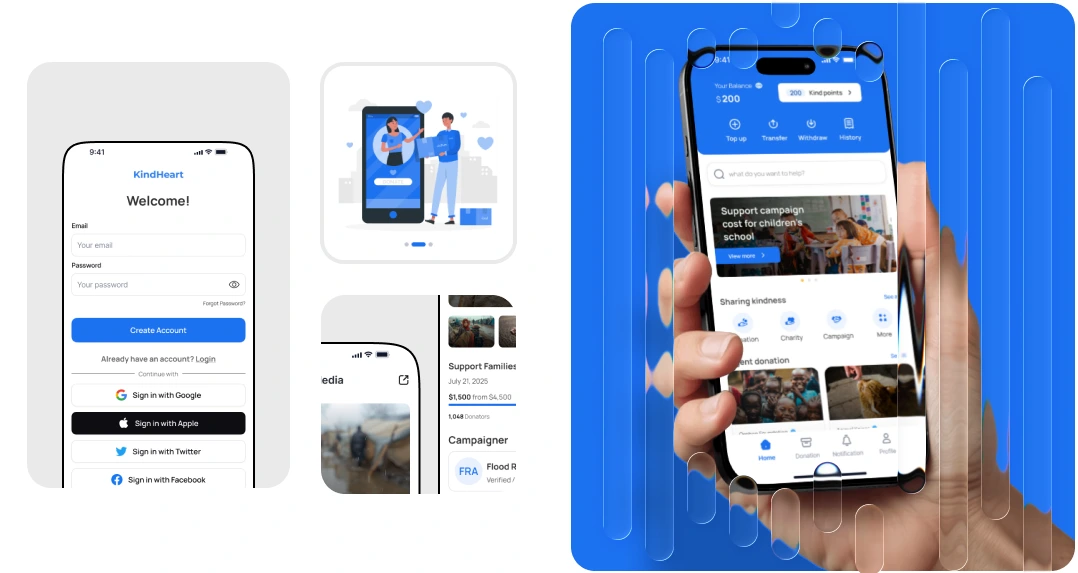
User Account Registration and Login Facilitate donors in creating their user account and accessing their fundraising initiatives through a secure registration and login process.
Personalized Donor Dashboard Showcase personalized fundraising campaigns, donations made, and other details based on the interests of donors.
AI-Powered Fundraising Campaign Suggestions Suggest relevant fundraising campaigns using past donor interests and behavior.
Campaign Management for Nonprofits Allow nonprofit organizations to create and manage campaigns by providing details of description, images, fundraising targets, and campaign progress.
Campaign Builder with Drag-and-Drop Interface Make it easy to create campaigns using an intuitive drag-and-drop interface and AI-driven visual suggestions.
Predictive Analysis of Fundraising Campaigns Analyze campaign trends using AI and machine learning capabilities.
AI-Assisted Chatbot Offer assistance to donors using chatbots powered by AI.
Single-Occurrence & Continuous Contributions Offer support for single-contribution and recurring contribution options so that users can choose their preferred option.
Multiple Payment Gateway Integration Offer integration with different payment gateway options such as Stripe & PayPal to make online contributions easy for users.
Campaign Progress Updates and Stories Offer features like tracking of donation campaign progress, available updates, stories, and images regarding fundraising campaigns.
Smart Notifications Offer relevant notifications for different campaigns, charity programs, and donation campaigns.
History of Donations Offer donors the option to track the history of donations made.
Campaign Sharing Option Offer donors the option to share different donation campaigns with family members and friends.
Real-Time Admin Dashboard Give nonprofit organizations a dashboard view of all the donations and campaigns made.
Technology
| Web Frontend | ReactJS |
| Mobile App Development | Flutter |
| Backend | Node.js with Express |
| AI & Machine Learning | Python, TensorFlow, Scikit-learn |
| Chatbot & NLP | Google Dialogflow |
| Analytics & Reporting | Power BI |
| Primary Database | PostgreSQL |
| NoSQL Database | MongoDB |
| Cloud Infrastructure | AWS, Firebase |
| Authentication & Security | SSL/TLS, Token-Based Authentication |
| Payment Gateway | Stripe, PayPal |
| Architecture | AI-Enabled Web and Mobile Platform |
Business Results
27%
Increase in Average Donation Size
Personalized campaign recommendations and more relevant donor communication helped encourage larger contributions and improve fundraising opportunities.
42%
Increase in Repeat Donations
AI-driven donor segmentation, personalized updates, and timely reminders helped strengthen donor relationships and encourage continued support. Improved Donor Engagement More relevant campaign suggestions and accessible donation information helped create a more engaging experience for supporters.
40%
Reduction in Manual Tasks
Automated donor workflows, campaign management capabilities, and chatbot assistance reduced repetitive administrative work, allowing staff to focus more on fundraising strategy and community impact.
60%
Higher Campaign Success Rate
Predictive insights helped the fundraising team make more informed campaign planning decisions and prioritize initiatives with stronger potential.
Product Gallery
Looking for a Tech Team to Launch Your Secure and Feature-Rich Custom Crowdfunding App Solution?
Collaborate with our software experts to transform your Fundraising App vision into a real-world success. Book your free consultation now!
- 450+ Engineers
- 14+ Years
- Flexible Engagement
- US Business-Hour Collaboration
Frequently Asked Questions
An AI-powered fundraising application is a software solution that can help nonprofit organizations collect donations, communicate with donors in a personalized manner, organize campaigns, and perform fundraising analysis with the help of artificial intelligence.
AI can help nonprofit organizations find out the preferences of their donors, suggest suitable campaigns, automate communications, analyze fundraising patterns, and make informed decisions regarding campaigns.
The main functionalities of the app include logging in, a personalized dashboard, campaign pages, donations, recurring donations, donation history, sharing campaigns, notifications, and administrative reports. In the case of an AI-powered app, it would also include donor segmentation and chatbots.
Yes. The described platform supports both one-time and recurring donations.
The chatbot will answer common questions, provide information about campaigns, and help donors make donations easier, while minimizing the number of usual support inquiries.
The time will depend on the scope, platform requirements, implementation of AI, payment integration, and other aspects. Creation of minimum viable product will be helpful.